Chapter 5 of 5
How Britain Works — Government, Law and Citizenship
Parliament, devolution, justice and your role in society
In this chapter (9)
- The Constitution and Rule of Law
- The Crown — Role and Responsibilities
- Parliament, Elections and the Government
- Devolved Governments — Scotland, Wales and Northern Ireland
- The Electoral System
- Fundamental Principles
- The Legal System and the Police
- Your Rights, Responsibilities and Community Role
- The UK and International Institutions
The Constitution and Rule of Law
Unlike most democracies, the UK has no single written constitution. The rules by which the country is governed are spread across centuries of law, judicial precedent and convention.
Britain has no single written constitution — yet the principles that govern the country are among the most developed in the world.
An unwritten constitution
A constitution is the set of principles by which a country is governed. The British constitution is not written down in any single document — it is described as 'unwritten'. This is mainly because the UK, unlike America or France, has never had a revolution leading to a completely new system of government. Its institutions have developed over hundreds of years through three sources: statute law (laws passed by Parliament), common law (developed by judges through precedent and tradition), and conventions (unwritten practices generally accepted as having the force of law).
Constitutional institutions
The main parts of the UK's constitutional framework are: the monarchy; Parliament (the House of Commons and the House of Lords); the Prime Minister; the cabinet; the judiciary (courts); the police; the civil service; and local government. Devolved governments in Scotland, Wales and Northern Ireland have the power to legislate on certain issues.
How to remember it
- Three sources: statute law (laws passed by Parliament), common law and conventions (unwritten).
- The main constitutional institutions: the monarchy, Parliament, the Prime Minister, the cabinet, the judiciary, the police, the civil service and local government.
Things to remember
- The UK does not have a single written constitution — unlike most other countries.
- The constitution draws from three sources: statute law, common law and conventions.
- Conventions are unwritten practices accepted as having the force of law.
- Main constitutional institutions: monarchy, Parliament, PM, cabinet, judiciary, police, civil service, local government.
The Crown — Role and Responsibilities
The UK is a constitutional monarchy. The monarch is head of state but real power rests with elected ministers. The national anthem and oath of allegiance are both directly testable.
The king or queen is head of state — but in a constitutional monarchy, the decisions of government are made by elected ministers, not the Crown.
A constitutional monarchy
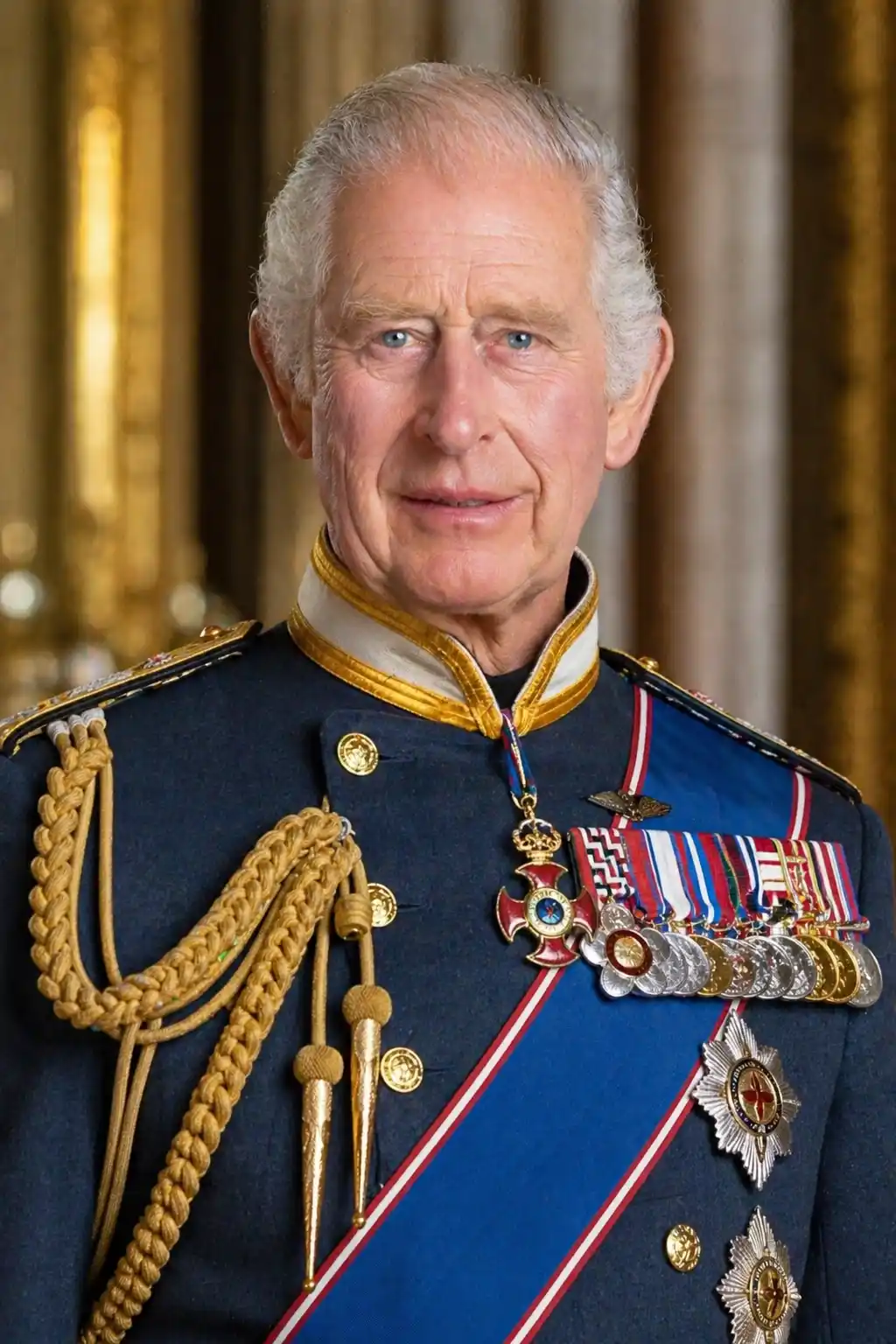
The UK is a constitutional monarchy. The monarch — currently King Charles III — is head of state but does not rule the country directly. The monarch appoints the government by inviting the leader of the party with the most MPs to become Prime Minister. The monarch has regular meetings with the Prime Minister and can advise, warn and encourage, but decisions on government policy are made by the Prime Minister and the cabinet.
Ceremonial roles
The monarch opens the new parliamentary session each year — delivering the King's Speech which summarises the government's policies — and gives Royal Assent to bills passed by Parliament, making them law. All Acts of Parliament are made in His Majesty's name. The monarch also represents the UK internationally, receiving foreign ambassadors, entertaining visiting heads of state and making state visits abroad.
The current royal succession
King Charles III has been sovereign since September 2022. His heir apparent is his elder son, William, Prince of Wales. William's three children are next in succession in order of birth: Prince George, Princess Charlotte and Prince Louis.
The national anthem
The national anthem is 'God Save the King' (or Queen). It is played at important national occasions and at events attended by the Royal Family.
“God save our gracious King! Long live our noble King! God save the King! Send him victorious, Happy and glorious, Long to reign over us, God save the King!”
Oath and affirmation of allegiance
New citizens swear or affirm loyalty to the King at the citizenship ceremony. Those who prefer not to swear an oath may make an affirmation instead.
“I (name) swear by Almighty God that on becoming a British citizen, I will be faithful and bear true allegiance to His Majesty King Charles the Third, his Heirs and Successors, according to law.”
How to remember it
- Ceremonial roles: the King's Speech at the opening of Parliament, Royal Assent to bills, and representing the UK internationally.
- New citizens take an oath or affirmation of allegiance to the King at the citizenship ceremony.
- The national anthem is 'God Save the King'.
Things to remember
- The UK is a constitutional monarchy — the monarch is head of state but does not govern directly.
- The monarch appoints the PM (leader of the party with the most MPs) and meets them regularly.
- Ceremonial roles: King's Speech at Parliament's opening, Royal Assent to bills, representing the UK internationally.
- Current monarch: King Charles III. Heir: Prince William. Next in line: George, Charlotte, Louis.
- National anthem: 'God Save the King' — played at important national occasions.
- New citizens take an oath or affirmation of allegiance to the King at the citizenship ceremony.
Parliament, Elections and the Government
Westminster Parliament is the UK's supreme law-making body. This section covers its two chambers, the PM and cabinet, the opposition, the Speaker, the civil service, local government and how Parliament is recorded.
Westminster Parliament is the heart of British democracy — elected by the people, checking the government, making the laws that govern the whole country.
The House of Commons
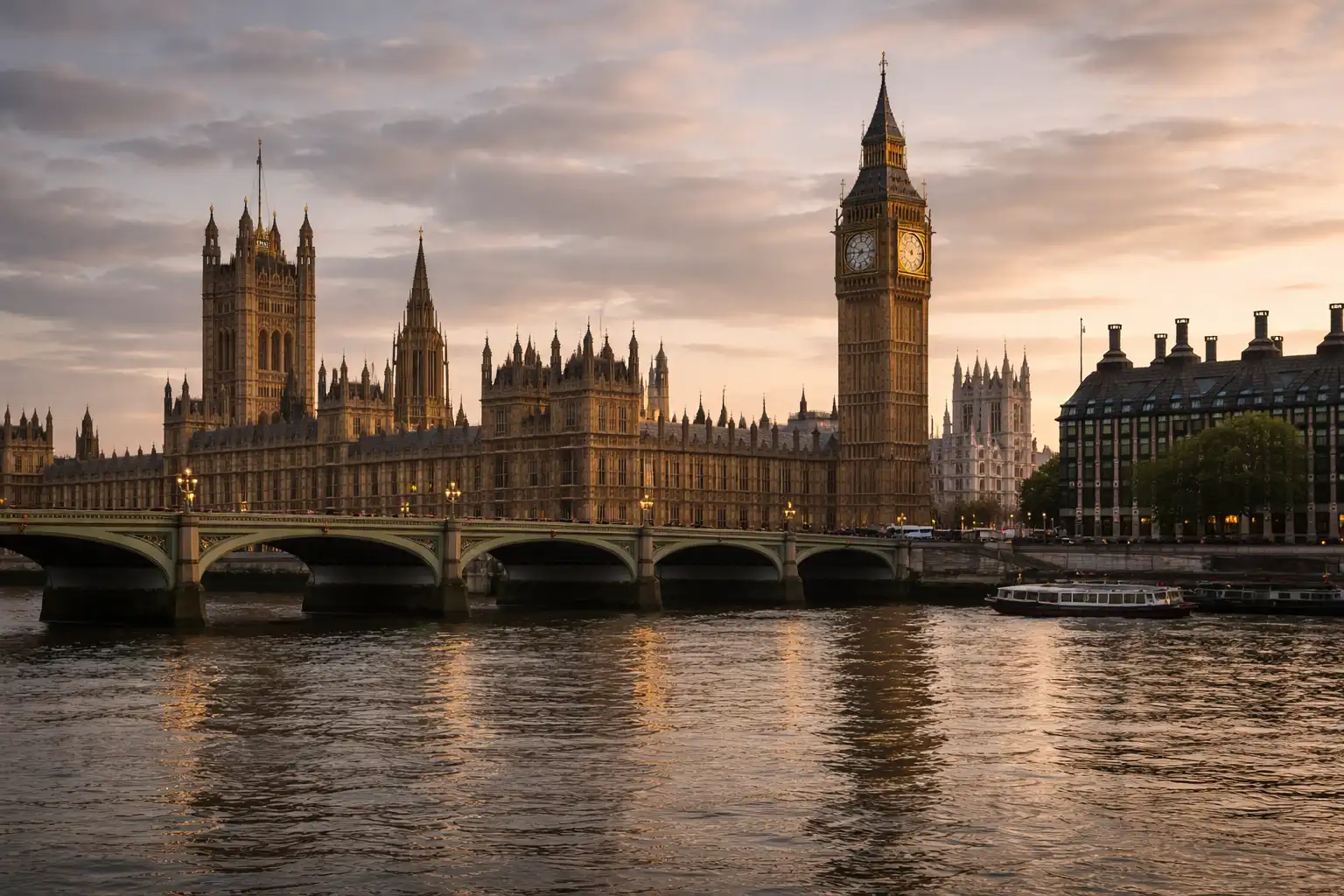
The House of Commons is the more important of the two chambers because its members are democratically elected. MPs are elected at a General Election held at least every five years using 'first past the post' — the candidate with the most votes in each constituency wins. The party with the majority of MPs forms the government; its leader becomes Prime Minister. If one party does not get a majority, two parties can form a coalition. If an MP dies or resigns, a fresh election called a by-election is held in that constituency. MPs represent everyone in their constituency, help create new laws, scrutinise the government and debate important national issues.
The House of Lords
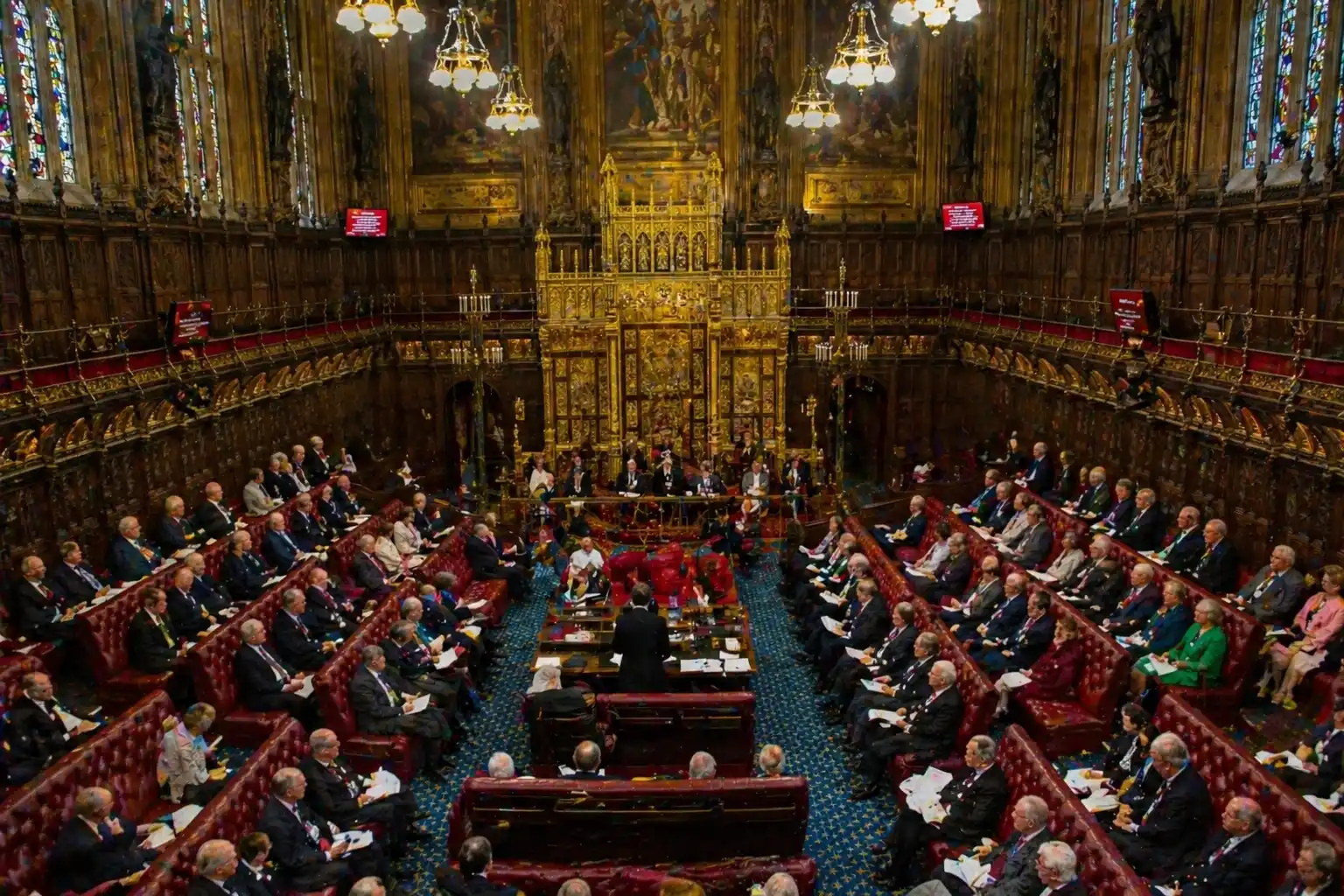
Members of the House of Lords — peers — are not elected. They include life peers (appointed for their lifetime on the advice of the Prime Minister, usually with distinguished careers), hereditary peers (who now elect a few representatives), and bishops of the Church of England. Since 1958, the Prime Minister has had the power to nominate life peers. The Lords can suggest amendments and check legislation passed by the Commons, but the Commons has powers to overrule it.
The Speaker
Debates in the House of Commons are chaired by the Speaker — the chief officer of the House. The Speaker is neutral and does not represent a political party, even though they are an MP. Chosen by other MPs in a secret ballot, the Speaker keeps order, ensures the opposition has guaranteed debate time and represents Parliament on ceremonial occasions.
The Prime Minister and cabinet
The Prime Minister is the leader of the political party in power. The official home is 10 Downing Street in central London; there is also a country house called Chequers. The PM appoints around 20 senior MPs as ministers — including the Chancellor of the Exchequer (economy), the Home Secretary (crime, policing and immigration) and the Foreign Secretary (foreign relations). Together they form the cabinet, which usually meets weekly and makes important decisions about government policy.
The opposition and shadow cabinet
The second-largest party is the opposition. The leader of the opposition usually becomes Prime Minister if their party wins the next General Election. The opposition challenges the government at Prime Minister's Questions (every week Parliament sits) and appoints shadow ministers to challenge each government department.
The civil service
Civil servants support the government in developing and implementing policies and delivering public services. They are accountable to ministers, chosen on merit and politically neutral. Core values: integrity, honesty, objectivity and impartiality.
Local government
Towns, cities and rural areas are governed by democratically elected councils — local authorities — funded by central government and local taxes. London has 33 local authorities alongside the Greater London Authority and the Mayor of London. Local elections for councillors are held every May.
Media and Parliament
Parliament's proceedings are broadcast on television and published in official reports called Hansard, available at www.parliament.uk. The UK has a free press. By law, radio and television coverage of political parties must be balanced with equal time for rival viewpoints.
How to remember it
- General elections are held at least every 5 years. A by-election is held when an MP dies or resigns.
- 10 Downing Street is the Prime Minister's official home. Chequers is the country house.
- The Speaker is neutral and is chosen by MPs in a secret ballot.
- The leader of the opposition challenges the government at Prime Minister's Questions every week Parliament sits.
Things to remember
- General Elections held at least every 5 years; by-election when an MP dies or resigns.
- The Speaker is neutral, chosen by MPs in a secret ballot, ensures opposition gets guaranteed debate time.
- PM's official home: 10 Downing Street. Country house: Chequers.
- Cabinet includes Chancellor (economy), Home Secretary (crime/policing/immigration), Foreign Secretary.
- Opposition leader challenges government at PM's Questions every week Parliament sits.
- Civil service core values: integrity, honesty, objectivity, impartiality.
- London has 33 local authorities plus the Greater London Authority. Local elections every May.
- Parliamentary proceedings published in Hansard. Free press in UK; TV/radio must be politically balanced.
Devolved Governments — Scotland, Wales and Northern Ireland
Since 1997, significant powers have been transferred from Westminster to elected bodies in Scotland, Wales and Northern Ireland. The specific numbers — 129 MSPs, 60 AMs, 90 MLAs — and their powers are directly tested.
Since 1997, Scotland, Wales and Northern Ireland each have their own elected bodies — but Westminster remains supreme on defence, foreign affairs, immigration, taxation and social security.
Devolution
Since 1997, some powers have been devolved from central government to give people in Wales, Scotland and Northern Ireland more control over matters that directly affect them. Policy and laws governing defence, foreign affairs, immigration, taxation and social security all remain under central UK government control. England does not have a separate parliament — English matters are handled directly by the UK Parliament at Westminster.
The Scottish Parliament
The Scottish Parliament was formed in 1999 and sits in Edinburgh. There are 129 members (MSPs), elected by proportional representation. The Scottish Parliament can pass laws on all matters not specifically reserved to the UK Parliament, including civil and criminal law, health, education, planning and has additional tax-raising powers.
The Welsh Assembly
The Welsh government and National Assembly sit in the Senedd in Cardiff Bay. The Assembly has 60 Assembly Members (AMs), elected every four years by proportional representation. Members can speak in Welsh or English — all publications are in both languages. The Assembly can make laws for Wales in 20 areas including education, health, economic development and housing. Since 2011, it can pass laws on these topics without UK Parliament agreement.
The Northern Ireland Assembly
The Northern Ireland Assembly was established after the Good Friday Agreement in 1998. It has 90 elected members (MLAs — Members of the Legislative Assembly), elected by proportional representation. A power-sharing agreement distributes ministerial offices among the main parties. The Assembly can make decisions on education, agriculture, the environment, health and social services. It has been running successfully since 2007.
| Body | Location | Members | Key powers |
|---|---|---|---|
| Scottish Parliament | Edinburgh | 129 MSPs (PR) | Civil/criminal law, health, education, planning, tax-raising powers |
| Welsh Assembly | Cardiff (Senedd) | 60 AMs (PR, 4-yr elections) | 20 areas incl. education, health, housing — independent of Westminster since 2011 |
| NI Assembly | Belfast (Stormont) | 90 MLAs (PR) | Education, agriculture, environment, health, social services |
How to remember it
- The Scottish Parliament has 129 MSPs. The Northern Ireland Assembly (Stormont, Belfast) has 90 MLAs and is based on power-sharing.
- Devolution began in 1997, and the devolved bodies have been operating since 1999.
Things to remember
- Devolution from 1997; devolved bodies operating since 1999.
- Westminster retains: defence, foreign affairs, immigration, taxation, social security.
- Scottish Parliament: 129 MSPs, proportional representation, all non-reserved matters, tax-raising powers.
- Welsh Assembly (Senedd, Cardiff): 60 AMs, 4-year elections, 20 areas of law, independent of Westminster since 2011.
- NI Assembly (Stormont, Belfast): 90 MLAs, power-sharing, running successfully since 2007.
- England has no separate parliament.
The Electoral System
The UK has had a fully democratic voting system since 1928. This section covers who can vote, the electoral register, how polling stations work, who can stand for election and how to visit the devolved assemblies.
The UK has been a full democracy since 1928 — but the right to vote must be actively registered for, and it comes with civic responsibilities.
Who can vote
The UK has had a fully democratic voting system since 1928. The current voting age of 18 was set in 1969. Adult citizens of the UK, and citizens of the Commonwealth and the Irish Republic who are resident in the UK, can vote in all public elections. Adult citizens of other EU states resident in the UK can vote in all elections except General Elections.
The electoral register
To vote in any election, your name must be on the electoral register. Register by contacting your local council electoral registration office. The register is updated every year in September or October — an electoral registration form is sent to every household and must be completed and returned. In Northern Ireland a different system applies: individual registration, where each eligible person completes their own form.
How to vote
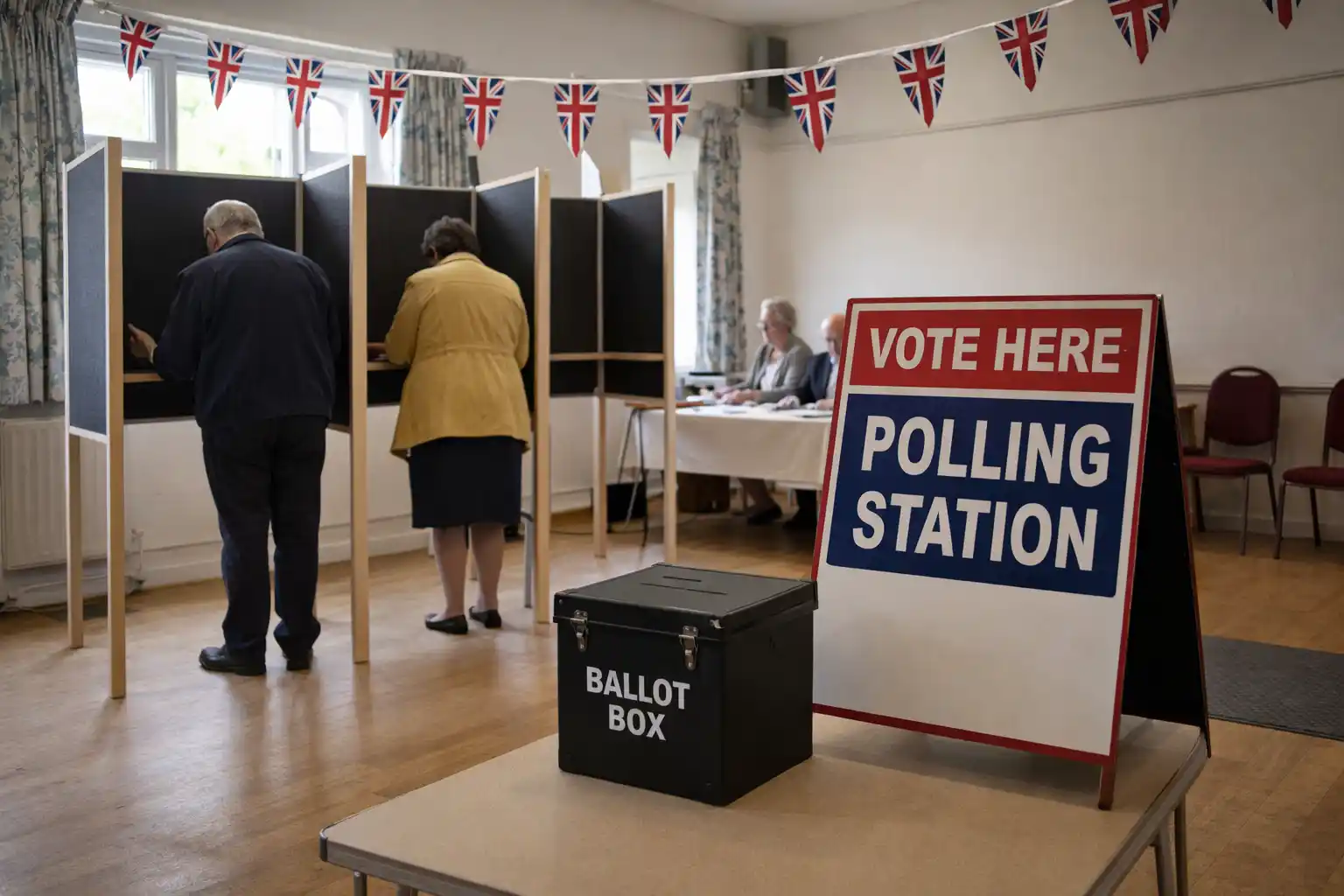
People vote at polling stations (called polling places in Scotland). Before the election you will be sent a poll card telling you where your polling station is and when the election takes place. Polling stations are open from 7.00 am until 10.00 pm on election day. Staff ask for your name and address; in Northern Ireland you must also show photographic identification. You fill in your ballot paper privately in a polling booth and place it in the ballot box. If you cannot get to a polling station, you can register for a postal ballot.
Standing for election
Most citizens of the UK, the Irish Republic or the Commonwealth aged 18 or over can stand for public office. Exceptions include members of the armed forces, civil servants and people found guilty of certain criminal offences. Members of the House of Lords may not stand for the House of Commons but are eligible for all other public offices.
Visiting Parliament and the devolved assemblies
The public can listen to debates in the Palace of Westminster from public galleries in both chambers — write to your local MP for tickets, or queue on the day. The Scottish Parliament sits at Holyrood in Edinburgh (www.scottish.parliament.uk). The Northern Ireland Assembly meets at Stormont in Belfast (www.niassembly.gov.uk). The Welsh Assembly meets in the Senedd in Cardiff Bay (www.wales.gov.uk).
How to remember it
- Polling stations are open from 7.00 am to 10.00 pm, and postal ballots are available.
- Commonwealth and Irish citizens can vote in all UK elections.
- Members of the House of Lords cannot stand for the House of Commons.
Things to remember
- Fully democratic since 1928; voting age reduced to 18 in 1969.
- Commonwealth and Irish citizens can vote in all UK elections; EU citizens can vote in all except General Elections.
- Must register on the electoral register to vote — through your local council.
- Register updated September/October each year; form sent to every household.
- NI: individual registration; photographic ID required at polling station.
- Polling stations open 7.00 am to 10.00 pm. Postal ballot available.
- Standing for election: exceptions include armed forces, civil servants, certain criminal offences.
- House of Lords members cannot stand for the House of Commons.
Fundamental Principles
Britain has a long history of protecting individual rights. The Human Rights Act 1998, equal opportunities law, and legislation on domestic violence, FGM and forced marriage are all testable and frequently examined.
Britain's commitment to individual rights stretches back to Magna Carta — and was reinforced in 1998 when the European Convention on Human Rights became part of UK law.
The European Convention and Human Rights Act
Britain has a long history of respecting individual rights — rooted in Magna Carta, the Habeas Corpus Act and the Bill of Rights 1689. British diplomats and lawyers played an important role in drafting the European Convention on Human Rights, which the UK signed in 1950. The Human Rights Act 1998 incorporated the European Convention into UK law. The government, public bodies and courts must all follow its principles.
Rights included in the European Convention
- Right to life
- Prohibition of torture
- Prohibition of slavery and forced labour
- Right to liberty and security
- Right to a fair trial
- Freedom of thought, conscience and religion
- Freedom of expression (speech)
Equal opportunities
UK laws ensure that people are not treated unfairly in any area of life or work because of their age, disability, sex, pregnancy and maternity, race, religion or belief, sexuality or marital status. If you face discrimination, you can get help from the Citizens Advice Bureau, the Equality and Human Rights Commission (England and Wales), the Scottish Human Rights Commission, or the Equality Commission for Northern Ireland.
Domestic violence, FGM and forced marriage
Violence in the home is a serious crime. Anyone violent towards their partner can be prosecuted. Any man who forces a woman to have sex — including a husband — can be charged with rape. The 24-hour National Domestic Violence Freephone Helpline is 0808 2000 247. Female genital mutilation (FGM) is illegal in the UK — practising it or taking a girl abroad for it is a criminal offence. Forced marriage is also a criminal offence. Forced Marriage Protection Orders were introduced in 2008 in England, Wales and Northern Ireland, and in Scotland in 2011. Breach can result in up to two years in jail for contempt of court.
How to remember it
- Convention in 1950, Human Rights Act in 1998.
- Female genital mutilation is illegal, including taking a girl abroad for it. Forced marriage is a criminal offence.
- The domestic violence helpline is 0808 2000 247, free and open 24 hours.
Things to remember
- UK signed the European Convention on Human Rights in 1950.
- Human Rights Act 1998 brought the Convention into UK law — government, public bodies and courts must follow it.
- Seven Convention rights include: right to life, prohibition of torture, right to liberty, right to a fair trial, freedom of religion, freedom of expression.
- Equal opportunities law protects against discrimination based on age, disability, sex, pregnancy, race, religion, sexuality and marital status.
- Domestic violence helpline: 0808 2000 247 (24 hours, freephone).
- FGM is illegal in UK — practising it or taking a girl abroad for it is a criminal offence.
- Forced marriage is a criminal offence. Protection Orders: 2008 (England/Wales/NI), 2011 (Scotland).
The Legal System and the Police
Every resident is expected to know and obey the law. This section covers criminal and civil law examples, police duties and structure, terrorism, the court system from magistrates to Crown Court, and how to access legal advice.
The law applies equally to everyone in the UK — no matter who they are or where they are from.
Criminal and civil law
Laws divide into criminal law — relating to crimes, investigated by the police and punished by the courts — and civil law, used to settle disputes between individuals or groups. Examples of criminal law include: carrying any weapon (even for self-defence — a criminal offence); selling or buying drugs such as heroin, cocaine, ecstasy and cannabis; causing harassment based on religion or ethnic origin (racial crime); selling tobacco to anyone under 18; smoking in nearly every enclosed public place; selling alcohol to under-18s or buying it for them; and drinking in public alcohol-free zones. Examples of civil law include: housing disputes between landlords and tenants; consumer rights disputes over faulty goods or services; employment disputes over wages, dismissal or discrimination; and debt.
The police
The three duties of the police are: to protect life and property, to prevent disturbances (keep the peace), and to prevent and detect crime. Police forces are organised into separate forces headed by Chief Constables and are independent of the government. Police Community Support Officers (PCSOs) support police officers — they patrol streets, work with the public and support officers at crime scenes and major events. Police and Crime Commissioners (PCCs) were elected in November 2012 in England and Wales. PCCs are directly elected and responsible for an efficient and effective police force — they set local police priorities and the budget, and appoint the Chief Constable.
Police complaints and terrorism
Anyone can complain about the police by going to a police station or writing to the Chief Constable. Complaints can also be made to an independent body: the Independent Police Complaints Commission (England and Wales), the Police Complaints Commissioner for Scotland, or the Police Ombudsman for Northern Ireland. The UK faces terrorist threats including from Al Qa'ida and its affiliates, and from Northern Ireland-related terrorism. Extremism means vocal or active opposition to fundamental British values — including religious and far-right extremism. If you think someone is trying to persuade you to join an extremist or terrorist cause, notify your local police force.
The criminal courts
In England, Wales and Northern Ireland, most minor criminal cases go to a Magistrates' Court. Magistrates and Justices of the Peace (JPs) are usually unpaid members of the local community without legal qualifications — supported by a legal adviser. In Northern Ireland, cases are heard by a legally qualified, paid District Judge. Serious offences are tried in a Crown Court before a judge and jury. In Scotland, minor offences go to a Justice of the Peace Court and serious cases to a Sheriff Court or, for murder, the High Court. A jury has 12 members in England, Wales and Northern Ireland, and 15 members in Scotland. Scotland also allows a verdict of 'not proven'.
Youth courts, civil courts and small claims
In England, Wales and Northern Ireland, accused persons aged 10 to 17 are heard in a Youth Court before up to three specially trained magistrates or a District Judge. Parents are expected to attend. The public is excluded and the accused's name cannot be published. Scotland uses the Children's Hearings System; Northern Ireland uses youth conferencing. Civil disputes — personal injury, family matters, contract and debt cases — are handled in County Courts (or Sheriff Courts in Scotland). More serious civil cases go to the High Court (England/Wales/NI) or Court of Session (Scotland). Small claims — under £10,000 in England and Wales, or £5,000 in Scotland and Northern Ireland — are settled informally before a judge with both sides around a table. Small claims can also be filed online at www.moneyclaim.gov.uk.
Solicitors and legal advice
Solicitors give advice on legal matters and represent clients in court. Find one through the Citizens Advice Bureau (www.citizensadvice.org.uk), the Law Society (England and Wales: www.lawsociety.org.uk), the Law Society of Scotland (www.lawscot.org.uk) or the Law Society of Northern Ireland (www.lawsoc-ni.org). Charges are usually based on time — find out likely costs at the start.
How to remember it
- The police have three duties: protect life and property, prevent disturbances, and prevent and detect crime.
- Carrying any weapon is a criminal offence, even for self-defence.
- Youth courts deal with accused people aged 10 to 17, the public is excluded and names cannot be published.
- Magistrates are usually unpaid and have no legal qualifications, and a legal adviser supports them.
Things to remember
- Police three duties: protect life/property · prevent disturbances · prevent and detect crime.
- PCSOs support police officers on patrol and at events. PCCs elected November 2012 — set priorities, appoint Chief Constable.
- Police complaints: IPCC (England/Wales), Police Complaints Commissioner (Scotland), Police Ombudsman (NI).
- Carrying any weapon is a criminal offence — even for self-defence.
- Magistrates are usually unpaid and without legal qualifications (supported by a legal adviser).
- Jury: 12 (England/Wales/NI); 15 (Scotland); 'not proven' verdict only in Scotland.
- Youth courts: accused aged 10–17, public excluded, names cannot be published.
- Small claims: under £10,000 (England/Wales) or £5,000 (Scotland/NI) — informal, no lawyer needed.
Your Rights, Responsibilities and Community Role
Citizenship in the UK comes with legal duties and opportunities to contribute — from tax and driving to jury service, school governance and volunteering.
Living in the UK means contributing to the community, paying tax, being a good neighbour and taking on civic duties when called.
Values and responsibilities
The shared responsibilities of everyone living in the UK include: obeying and respecting the law; respecting the rights of others; treating others fairly; behaving responsibly; helping and protecting your family; respecting the environment; treating everyone equally regardless of sex, race, religion, age, disability, class or sexual orientation; working to provide for yourself and your family; helping others; and voting in local and national elections.
Being a good neighbour
When you move into a new home, introduce yourself to your neighbours. Getting to know them helps you become part of the community. You can prevent problems by respecting their privacy, limiting noise, keeping your garden tidy and only putting bins out when they are due to be collected.
Income tax and National Insurance
Income tax is paid on wages, profits from self-employment, taxable benefits, pensions, and income from property, savings and dividends. Money from income tax pays for roads, education, the police and the armed forces. For most employees, tax is deducted automatically by the employer — called Pay As You Earn (PAYE). Self-employed people use self-assessment, completing a tax return. Almost everyone in paid work must also pay National Insurance (NI) contributions, which fund the state retirement pension and the NHS. Employees have NI deducted; the self-employed pay it themselves. Not paying enough NI means you cannot receive Jobseeker's Allowance or a full state retirement pension.
National Insurance number
A National Insurance number is a unique personal account number ensuring your NI and tax are recorded against your name. All young people in the UK are sent one just before their 16th birthday. Non-UK nationals starting work or self-employment in the UK need one — you can start work without one but must then apply by telephoning the Department for Work and Pensions (DWP). A NI number does not on its own prove you have the right to work in the UK.
Driving
The minimum age to drive a car or motorcycle is 17; for a moped it is 16. You must pass a theory test and a practical test. A licence is valid until age 70, then renewable every three years. In Northern Ireland, newly qualified drivers must display an 'R' plate for one year. An EU, Iceland, Liechtenstein or Norway licence is valid in the UK for as long as it is valid; any other country's licence can be used for up to 12 months. Residents must register their vehicle with the DVLA, pay annual road tax and display the tax disc, and have valid motor insurance — driving without insurance is a serious criminal offence. Vehicles over three years old need an annual MOT test.
Jury service, school governance and volunteering
Anyone on the electoral register aged 18 to 70 can be called for jury service and must do it unless ineligible or excused for good reason. School governors (school board members in Scotland) are community members who contribute to children's education. They must be 18 or over (no upper age limit) and have three roles: setting the strategic direction of the school, ensuring accountability, and monitoring and evaluating performance. Volunteering opportunities include: helping in hospitals, youth projects, museums and arts councils; volunteering with the police as a special constable; or applying to become a magistrate. Donating blood takes about an hour — register at www.blood.co.uk (England/North Wales), www.welsh-blood.org.uk (rest of Wales), www.scotblood.co.uk (Scotland) or www.nibts.org (Northern Ireland). Register as an organ donor at www.organdonation.nhs.uk. Major UK charities include the British Red Cross, Age UK, NSPCC, Crisis, Shelter, Cancer Research UK, the National Trust, Friends of the Earth and the PDSA. The National Citizen Service gives 16- and 17-year-olds opportunities for outdoor activities, skills and community projects.
Looking after the environment
Recycle as much waste as possible — this uses less energy and reduces landfill. Shopping locally supports businesses and reduces carbon footprint. Walking or using public transport reduces pollution.
How to remember it
- A National Insurance number does not prove you have the right to work in the UK.
- PAYE means tax is deducted automatically by your employer. Self-employed people use self-assessment.
- You can drive a car or motorcycle at 17 and a moped at 16. Driving without motor insurance is a serious criminal offence.
- Jury service: you are chosen from the electoral register, aged 18 to 70.
Things to remember
- Income tax funds roads, education, the police and the armed forces.
- PAYE: tax automatically deducted by employer. Self-employed use self-assessment.
- NI contributions fund the state retirement pension and the NHS.
- A NI number does NOT prove the right to work in the UK.
- Minimum driving ages: car/motorcycle 17; moped 16. Licence valid to 70, renewable every 3 years.
- Driving without motor insurance is a serious criminal offence. Vehicles over 3 years need annual MOT.
- NI: 'R' plate required for one year after passing test.
- Jury service: electoral register, aged 18–70. School governors: must be 18+, no upper age limit, three key roles.
The UK and International Institutions
The UK is a member of several major international organisations. The Commonwealth, EU, Council of Europe, UN and NATO — the key facts about each are regularly tested.
The UK is a founding or early member of the world's most important international organisations — from the Commonwealth to the United Nations Security Council.
The Commonwealth
The Commonwealth is an association of countries working together towards shared goals in democracy and development. Most member states were once part of the British Empire, although a few that were not have also joined. The Commonwealth currently has 54 member states. Membership is voluntary — the Commonwealth has no power over members, although it can suspend membership. King Charles III is the ceremonial head. The Commonwealth is based on democracy, good government and the rule of law.
The European Union
The European Union was originally called the European Economic Community (EEC), set up by six western European countries — Belgium, France, Germany, Italy, Luxembourg and the Netherlands — who signed the Treaty of Rome on 25 March 1957. The UK originally decided not to join but became a member in 1973. The UK left the EU after the Brexit vote; Brexit officially took place at 23:00 GMT on 31 January 2020. There are now 27 EU member states.
The Council of Europe, UN and NATO
The Council of Europe is separate from the EU. It has 47 member countries, including the UK, and is responsible for the protection and promotion of human rights. It draws up conventions, the most well-known of which is the European Convention on Human Rights. The United Nations (UN) has more than 190 member countries. Set up after the Second World War to prevent war and promote peace, the UN Security Council has 15 members — the UK is one of five permanent members. NATO — the North Atlantic Treaty Organization — is a group of European and North American countries who have agreed to help each other if they come under attack and to maintain peace between members.
| Organisation | Members | Key fact |
|---|---|---|
| Commonwealth | 54 member states | King Charles III is ceremonial head; democracy, good government, rule of law |
| European Union | 27 members (UK left 2020) | Treaty of Rome 25 March 1957 (6 founders); UK joined 1973; Brexit 31 Jan 2020 |
| Council of Europe | 47 members | Separate from EU; oversees European Convention on Human Rights |
| United Nations | 190+ countries | UK is 1 of 5 permanent members of the 15-member Security Council |
| NATO | European and N. American countries | Members agree to help each other if attacked; maintains peace |
How to remember it
- The EU began when six countries signed the Treaty of Rome on 25 March 1957. The UK joined in 1973 and left at 23:00 GMT on 31 January 2020.
- The Commonwealth has 54 member states, and King Charles III is its ceremonial head.
- The UK is one of five permanent members of the 15-member UN Security Council.
- NATO members agree to help each other if attacked.
Things to remember
- Commonwealth: 54 member states; King Charles III is ceremonial head; based on democracy, good government and rule of law.
- EU founded by 6 countries signing the Treaty of Rome on 25 March 1957. UK joined 1973.
- Brexit: UK left EU at 23:00 GMT on 31 January 2020. Now 27 EU members.
- Council of Europe: 47 members; separate from EU; responsible for European Convention on Human Rights.
- UN: 190+ countries; UK is one of 5 permanent members of the 15-member Security Council.
- NATO: members agree to help each other if attacked; aims to maintain peace.
Finished Chapter 5?