Chapter 2 of 5
Understanding the United Kingdom
The four nations, their governance and their place in the world
The Four Nations
The United Kingdom is a single state made up of four distinct countries. Understanding what the UK is — and what it is not — is one of the most commonly tested distinctions in the exam.
The United Kingdom and Great Britain are not the same thing — and the exam will test whether you know the difference.
The four countries
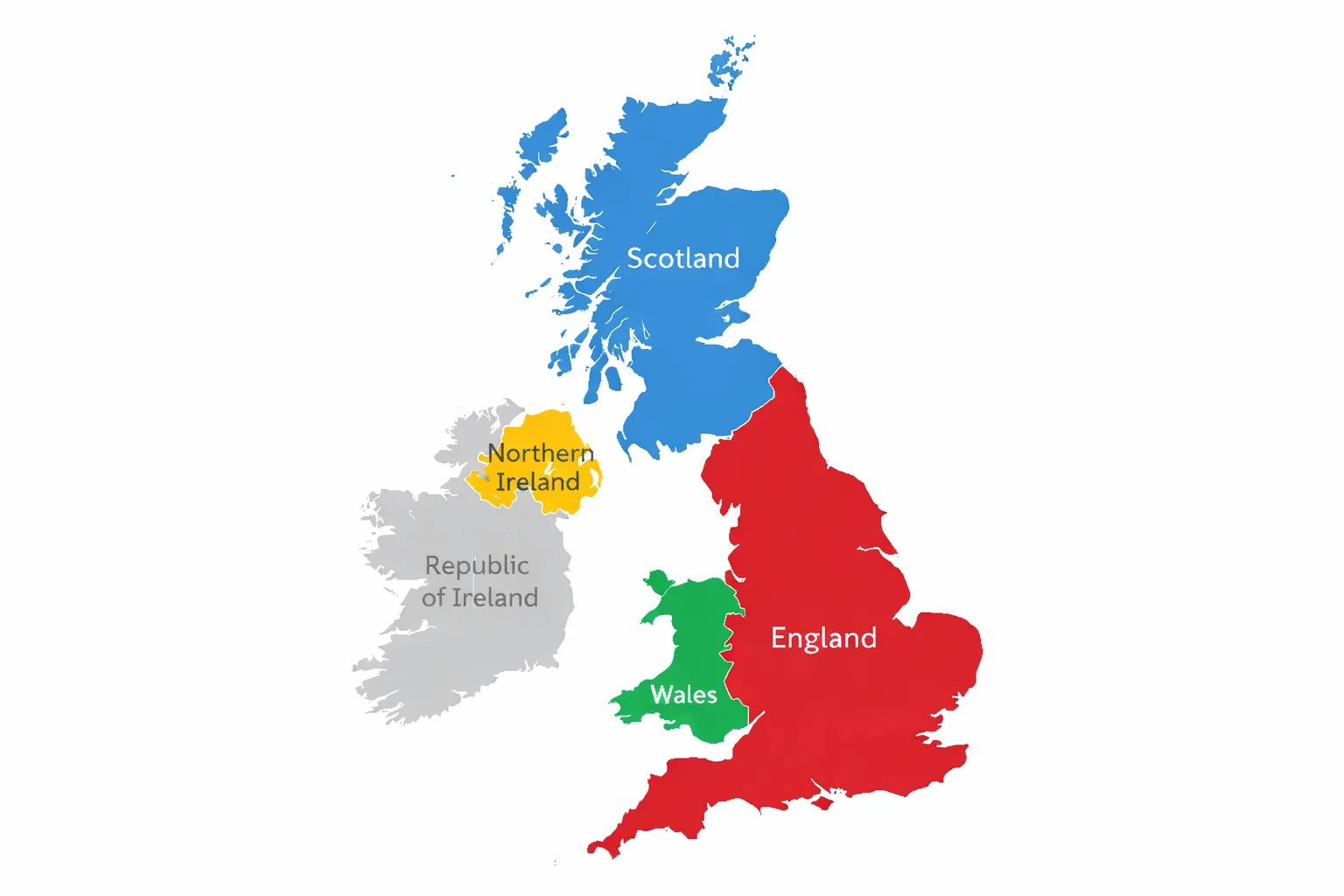
The UK is made up of four countries: England, Scotland, Wales and Northern Ireland. The rest of Ireland is an independent country and is not part of the UK. This distinction matters — Northern Ireland shares the island of Ireland with the Republic of Ireland, but politically it belongs to the United Kingdom. Each nation also has its own patron saint: St George (England), St Andrew (Scotland), St David (Wales) and St Patrick (Northern Ireland).
The official name and key terms
The full official name of the country is the United Kingdom of Great Britain and Northern Ireland. 'Great Britain' refers only to England, Scotland and Wales — it does not include Northern Ireland. The words 'Britain', 'British Isles' and 'British', however, are used throughout the official handbook to refer to everyone in the UK, meaning all four countries.
| Term | Includes |
|---|---|
| United Kingdom (UK) | England, Scotland, Wales and Northern Ireland |
| Great Britain | England, Scotland and Wales only |
| British | Everyone in the UK — all four countries |
| British Isles | Geographical term — including Great Britain, Ireland, and surrounding islands |
How to remember it
- Counting up: Great Britain is three countries. The United Kingdom is four, because Northern Ireland joins them.
- The patron saints follow the same order as the countries: George (England), Andrew (Scotland), David (Wales), Patrick (Northern Ireland).
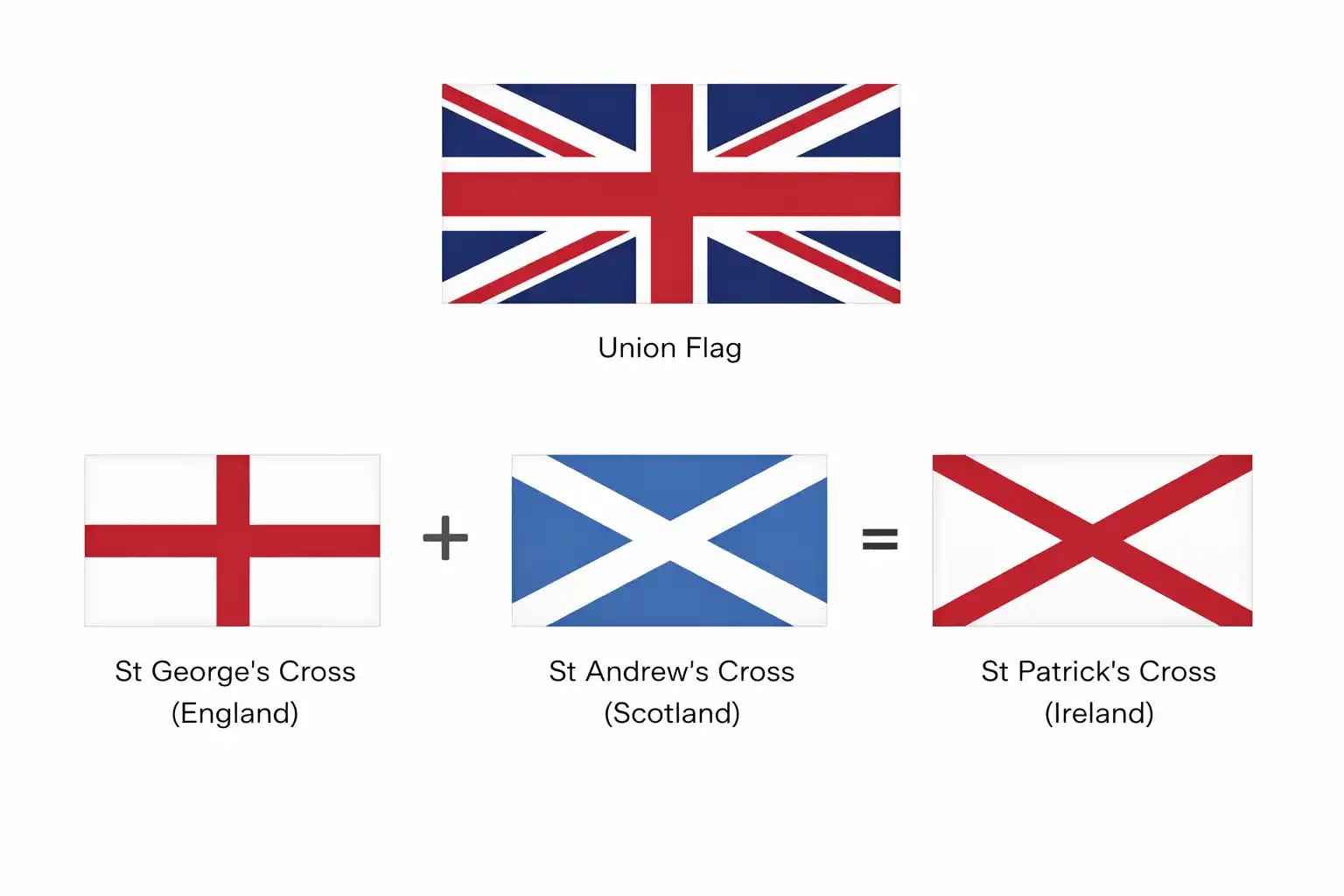
- The Union Flag combines the crosses of St George, St Andrew and St Patrick. Wales has no cross of its own on it.
Things to remember
- The UK is made up of four countries: England, Scotland, Wales and Northern Ireland.
- The rest of Ireland is an independent country — it is not part of the UK.
- The official name is the United Kingdom of Great Britain and Northern Ireland.
- Great Britain refers only to England, Scotland and Wales — it excludes Northern Ireland.
- The term 'British' refers to people of the United Kingdom.
- The term 'British Isles' is a geographical term including Great Britain, Ireland, and surrounding islands — it is not a political term.
Crown Dependencies and Overseas Territories
Beyond the four nations, the UK has a broader family of linked territories — some nearby, some on the other side of the world. None of them are part of the UK, but all have a formal relationship with it.
The UK's reach extends beyond its four nations to islands and territories across the globe — linked to Britain, but not part of it.
Crown dependencies
There are several islands closely linked with the UK that are not part of it: the Channel Islands and the Isle of Man. These islands have their own governments and are known as Crown dependencies. They are distinct from the UK in terms of governance but remain connected to the Crown.
British overseas territories
There are also several British overseas territories in other parts of the world. Examples include St Helena and the Falkland Islands. Like Crown dependencies, these territories are linked to the UK but are not a part of it.
How to remember it
- Close to home means Crown dependencies: the Channel Islands and the Isle of Man.
- Far away means overseas territories: St Helena and the Falkland Islands are examples.
- Both groups are linked to the UK, but neither is part of it.
Things to remember
- The Channel Islands and the Isle of Man are Crown dependencies — linked to the UK but not part of it.
- Crown dependencies have their own governments.
- The UK government is responsible for defence and international affairs on behalf of the Crown dependencies.
- British overseas territories include St Helena and the Falkland Islands.
- Overseas territories are linked to the UK but are not part of it.
How the UK is Governed
The UK is governed centrally from Westminster, but three of its four nations also have their own parliaments or assemblies with powers over certain areas of public life. This combination of central and devolved government shapes how the country works.
Power in the UK flows from one central parliament — but Scotland, Wales and Northern Ireland each have their own layer of government too.
Central government at Westminster
The UK is governed by the parliament sitting in Westminster, London. This is the central law-making body for the whole of the United Kingdom. Certain matters are reserved to Westminster and apply across all four nations: defence, foreign affairs, immigration, taxation and social security.
Devolved governments
Scotland, Wales and Northern Ireland also have their own parliaments or assemblies with devolved powers in defined areas. Devolved powers means that these bodies can legislate on certain matters — such as health and education — within their own nations, without needing approval from Westminster on those specific issues. England does not have its own separate parliament; English affairs are handled directly by the UK Parliament at Westminster.
How to remember it
- Reserved means kept at Westminster. Devolved means handed down.
- If a question mentions defence, foreign affairs, immigration, taxation or social security, think Westminster.
- Three nations have their own parliament or assembly. England does not: English affairs are handled by the UK Parliament.
Things to remember
- The UK is governed by the parliament at Westminster.
- Scotland, Wales and Northern Ireland have their own parliaments or assemblies with devolved powers.
- Devolved powers apply in defined areas only — Westminster retains authority over national matters.
- England does not have its own parliament — English affairs are handled by the UK Parliament.
Finished Chapter 2?