Chapter 3 of 5
Britain Through the Ages
From prehistoric settlers to the modern nation
In this chapter (9)
- Prehistoric Britain — Stone Age to Iron Age
- Roman Britain (55 BC – AD 410)
- Anglo-Saxons and Vikings (AD 600 – 1066)
- The Medieval Period (1066 – 1485)
- Tudors and Stuarts (1485 – 1714)
- Union, Empire and Reform (1707 – 1901)
- The World Wars and Social Change (1900 – 1945)
- Modern Britain (1945 – Present)
- Great British Inventions and Innovators
Prehistoric Britain — Stone Age to Iron Age
Britain's earliest history stretches back tens of thousands of years, from the first hunter-gatherers who crossed a land bridge from Europe to the farmers, metalworkers and tribal societies who shaped the landscape long before any written record.
Britain's story begins not with kings or parliaments, but with the slow arrival of people crossing land that no longer exists.
The first people
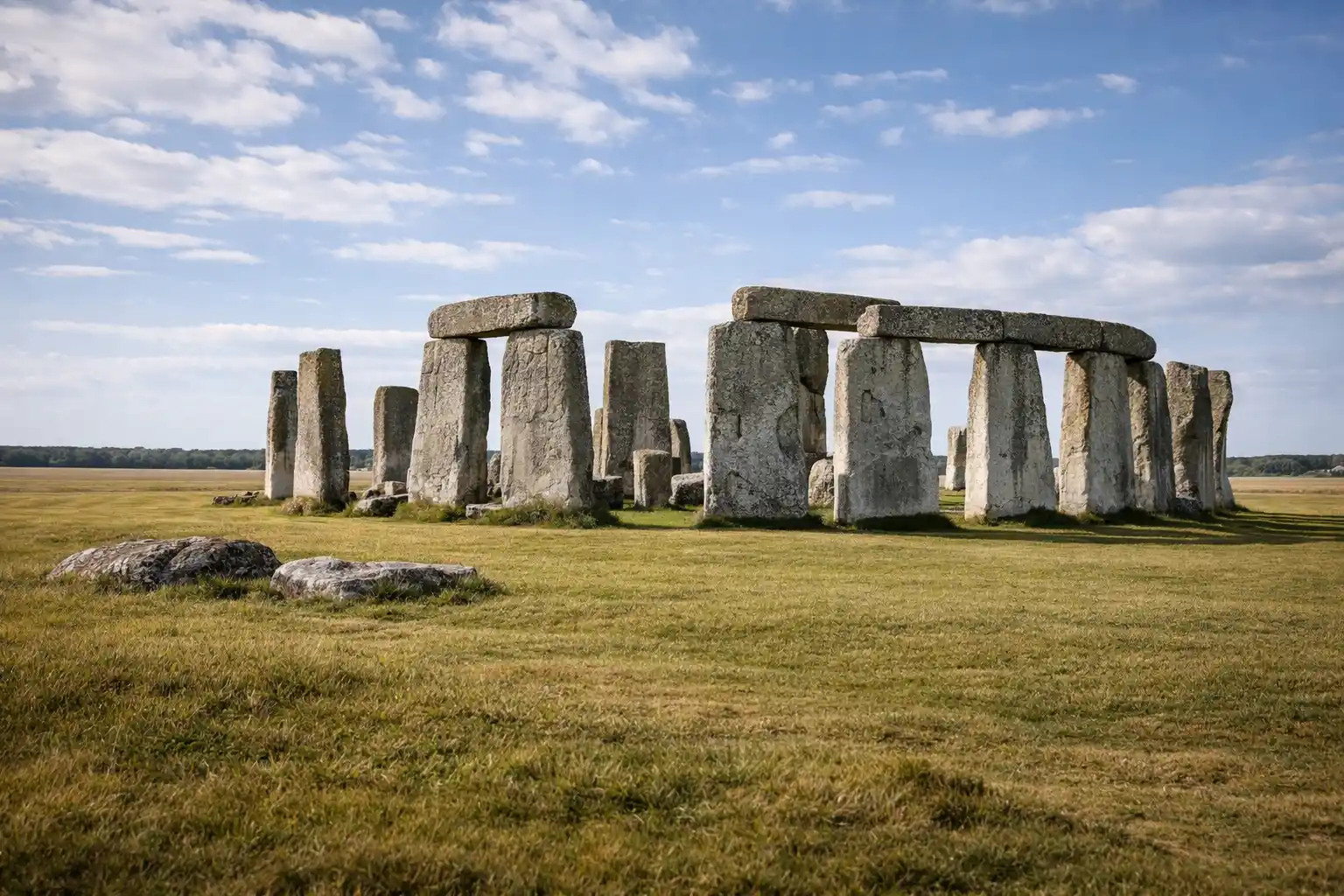
Britain became permanently separated from the continent by the English Channel around 10,000 years ago. The first inhabitants were hunter-gatherers who came from the area of modern-day Netherlands. Around 6,000 years ago, the first farmers arrived from south-east Europe. They cleared land, built houses and tombs, and raised monuments. One of these, Stonehenge, still stands in the English county of Wiltshire and was probably a special gathering place for seasonal ceremonies. Another surviving site, Skara Brae on Orkney off the north coast of Scotland, is the best-preserved prehistoric village in northern Europe and has helped archaeologists understand how people lived near the end of the Stone Age.
The Bronze Age
Around 4,000 years ago, people learned to make bronze, which produced better tools and weapons than stone. Gold and bronze ornaments found in burial sites from this period offer a rare window into the lives and beliefs of these early communities.
The Iron Age
Around 2,500 years ago, iron working was introduced from southern Europe. Iron tools transformed farming and warfare, and large hill forts — built for protection and as community centres — began to appear across the land. Maiden Castle in Dorset is a notable example. Various tribes lived across Britain, including the Picts in Scotland. They spoke Celtic languages, which are the ancestors of modern Welsh, Scottish Gaelic and Irish Gaelic.
How to remember it
- The dates count down: about 10,000 years ago Britain separated from the continent, then 6,000 (farmers), 4,000 (Bronze Age) and 2,500 (Iron Age).
- Stonehenge means Wiltshire. Skara Brae means Orkney. Maiden Castle, a hill fort, means Dorset.
Things to remember
- Britain separated from the continent about 10,000 years ago; the first people came from the area of modern-day Netherlands.
- The first farmers arrived around 6,000 years ago from south-east Europe and built monuments including Stonehenge in Wiltshire.
- Skara Brae (Orkney, Scotland) is the best-preserved prehistoric village in northern Europe.
- Stonehenge was probably a special gathering place for seasonal ceremonies.
- The Bronze Age began around 4,000 years ago; the Iron Age around 2,500 years ago.
- Iron working came from southern Europe; hill forts such as Maiden Castle in Dorset were built for protection.
- Tribes including the Picts spoke Celtic languages — ancestors of Welsh, Scottish Gaelic and Irish Gaelic.
Roman Britain (55 BC – AD 410)
The Romans brought Britain into the wider world of empire — introducing roads, law, towns and Christianity — and left a physical and cultural mark that endured long after their departure in AD 410.
Rome tried twice to conquer Britain — the first attempt failed, the second lasted four centuries.
Invasion and conquest
Julius Caesar led a Roman invasion of Britain in 55 BC, but it was unsuccessful. It was not until AD 43 that Emperor Claudius successfully invaded and the Romans took control of much of Britain, remaining for 400 years. They successfully occupied southern Britain but struggled to control the north — modern-day Scotland. Queen Boudicca of the Iceni tribe led an uprising against the Romans, which was eventually defeated.
Hadrian's Wall
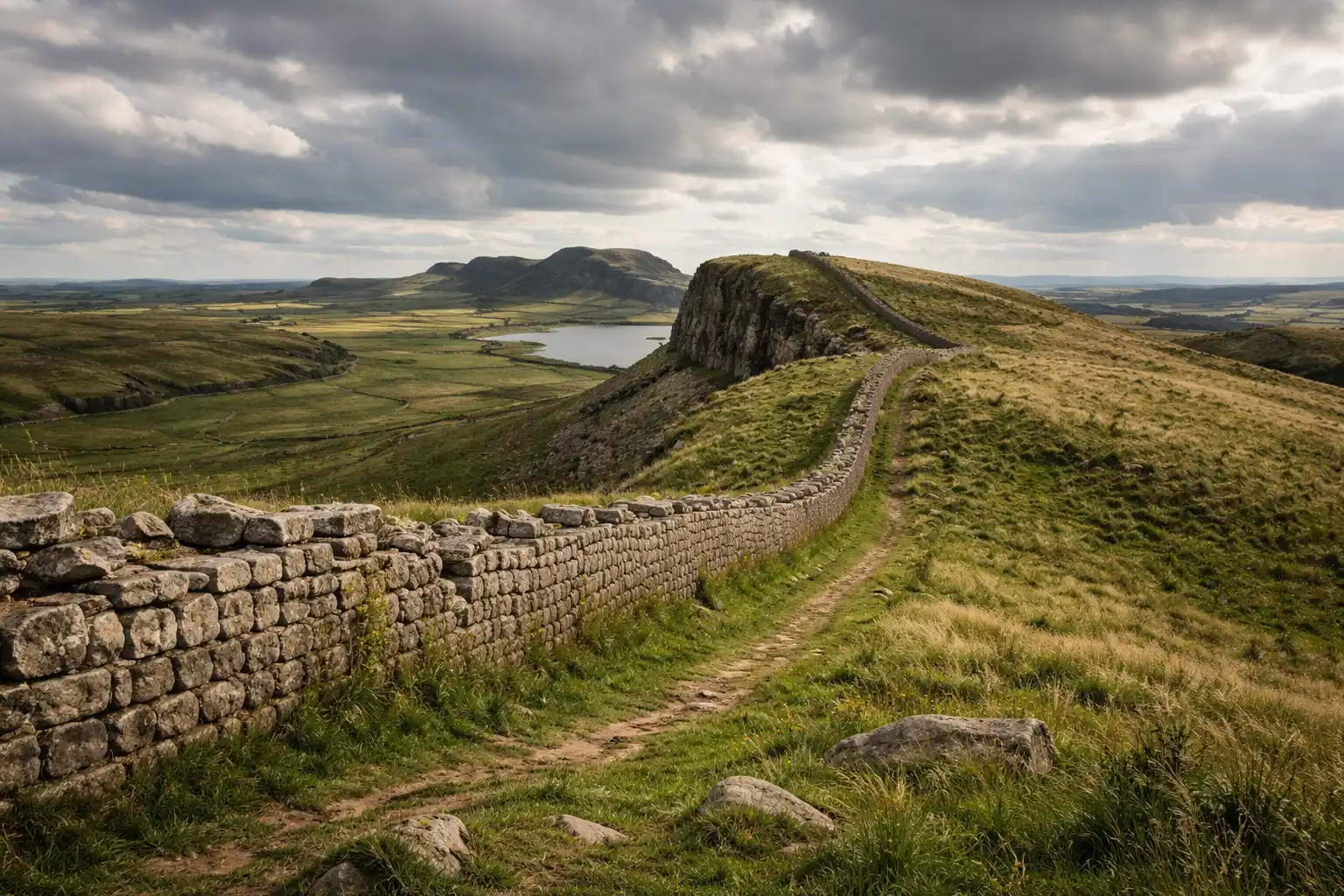
Emperor Hadrian built a wall across the north of England to keep out the Picts, the ancestors of the Scottish people. Parts of the wall, including the forts of Housesteads and Vindolanda, can still be seen today. It is a popular area for walkers and is a UNESCO World Heritage Site.
Roman contributions
The Romans built roads and public buildings, created a structure of law, and introduced new plants and animals. Many modern UK towns are still located on the sites of Roman settlements. It was during the 3rd and 4th centuries AD that the first Christian communities began to appear in Britain.
Roman withdrawal
In AD 410, the Roman army left Britain to defend other parts of the Roman Empire. Their departure left Britain without the centralised power that had defined it for nearly four centuries.
How to remember it
- 55 BC failed, AD 43 succeeded, and the Romans stayed for about 400 years until AD 410.
- Hadrian's Wall was built to keep out the Picts.
Things to remember
- Julius Caesar's invasion in 55 BC was unsuccessful.
- Emperor Claudius successfully invaded in AD 43; the Romans stayed for 400 years.
- Queen Boudicca of the Iceni tribe led an uprising against the Romans — it was eventually defeated.
- Hadrian's Wall was built to keep out the Picts (ancestors of the Scottish people) and is a UNESCO World Heritage Site.
- The Romans built roads, public buildings and created a structure of law.
- The first Christian communities in Britain appeared in the 3rd and 4th centuries AD.
- The Roman army left Britain in AD 410.
Anglo-Saxons and Vikings (AD 600 – 1066)
After the Romans left, Britain entered a new age shaped by waves of settlers from northern Europe. The Anglo-Saxons established kingdoms and spread Christianity; the Vikings came first to raid, then to settle — leaving traces in the language and place names still visible today.
The languages, kingdoms and place names of modern Britain were largely shaped by peoples who arrived in the five centuries after Rome withdrew.
The Anglo-Saxon kingdoms
After the Romans left, tribes from northern Europe — the Jutes, Angles and Saxons — invaded and settled in parts of England and the Scottish Lowlands. Their language, Anglo-Saxon, is the basis of modern English. During this period the kingdoms of Northumbria, Mercia and Wessex were established.
The spread of Christianity
Parts of Britain remained Christian after the Romans left. Missionaries including Augustine, Columba, Aidan and Patrick spread the faith and all became saints. St Patrick was a Christian missionary to Ireland in the 5th century and is now the patron saint of Ireland.
Viking raids and settlement
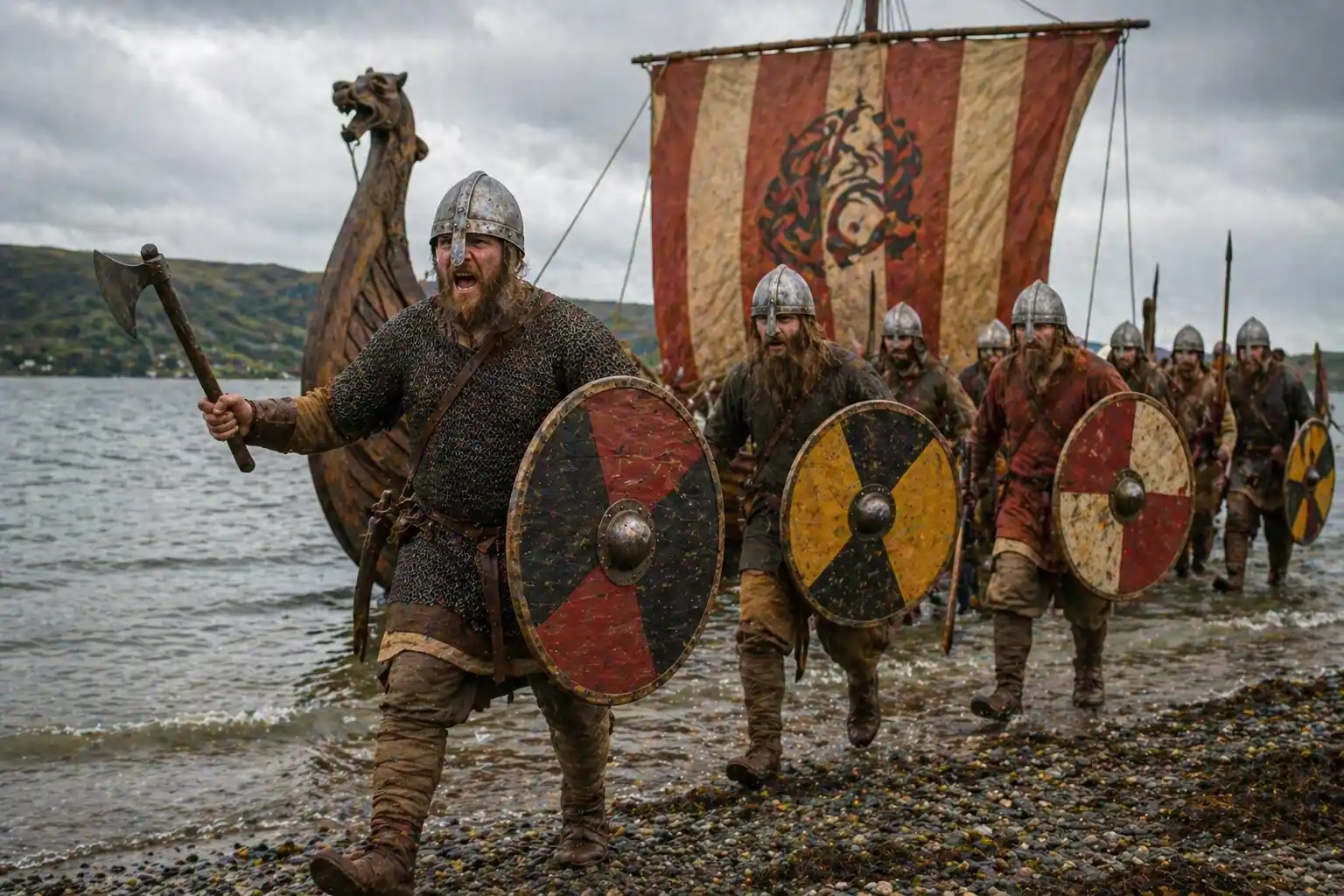
The Vikings came from Denmark and Norway. They first visited Britain in AD 789 to raid coastal towns, taking goods and slaves. In time they began to settle — particularly in the east and north of England, in an area known as the Danelaw. Many place names in this region, such as Grimsby and Scunthorpe, come from the Viking languages. The Anglo-Saxon kingdoms united under King Alfred the Great, who defeated the Vikings. Viking settlers gradually mixed with local communities and some converted to Christianity. The first Danish king of England was Cnut, also called Canute.
Language and literature
By 1066, versions of Anglo-Saxon were spoken across England. The epic poem Beowulf — written in Anglo-Saxon — is among the earliest surviving examples of English literature and is still read today.
How to remember it
- Jutes, Angles and Saxons together are the Anglo-Saxons, and their language is the basis of modern English.
- The three Anglo-Saxon kingdoms to know are Northumbria, Mercia and Wessex.
- Grimsby and Scunthorpe are examples of place names that come from Viking languages.
Things to remember
- The Jutes, Angles and Saxons settled in England and the Scottish Lowlands after the Romans left; Anglo-Saxon is the basis of modern English.
- The kingdoms of Northumbria, Mercia and Wessex were established in this period.
- St Patrick was a 5th-century missionary to Ireland and is its patron saint.
- Vikings from Denmark and Norway first raided Britain in AD 789, then settled in the Danelaw (east and north England).
- King Alfred the Great united the Anglo-Saxon kingdoms and defeated the Vikings.
- The first Danish king was Cnut (also called Canute).
- Grimsby and Scunthorpe are examples of place names derived from Viking languages.
- Beowulf is an Anglo-Saxon poem still read today.
The Medieval Period (1066 – 1485)
The Norman Conquest transformed England — bringing a new ruling class, a new language, and a new legal order. Over the next four centuries, Parliament emerged, the Black Death reshaped society, and England's wars at home and abroad defined the boundaries of a nation.
The Middle Ages — from the Norman Conquest to the Wars of the Roses — were a time of almost constant war, yet also the era in which Parliament, common law and the English language took their modern form.
The Norman Conquest
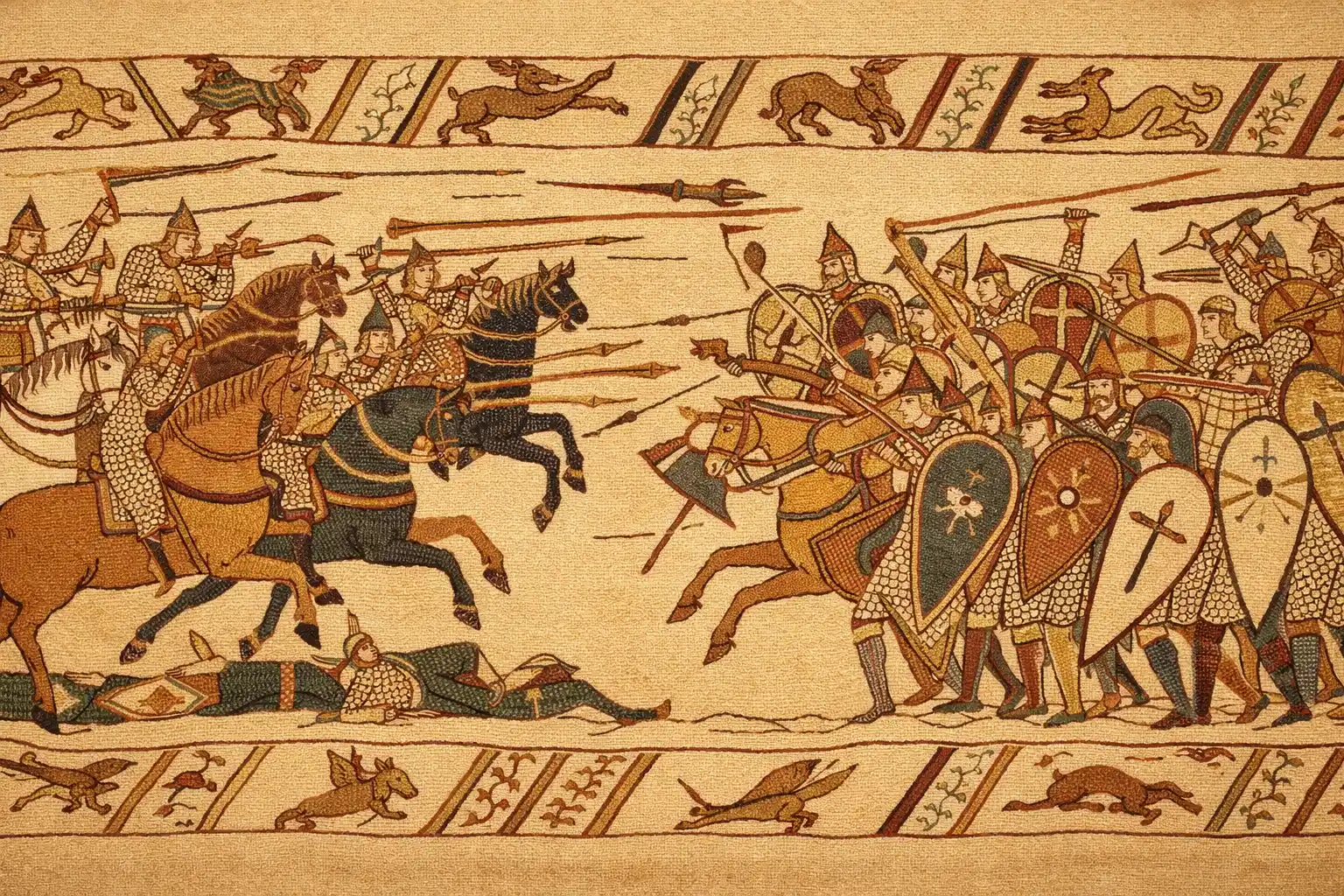
In 1066 the Norman king William the Conqueror defeated the English at the Battle of Hastings and became king. He produced the Domesday Book — a detailed survey of land and wealth in England — and introduced the feudal system, in which the king gave land to lords in return for military service. Lords in turn had serfs: peasants tied to their lord's land who could not move away freely.
England, Wales, Scotland and Ireland
The medieval period was one of almost constant conflict as English kings fought to extend their control. In 1284, King Edward I introduced the Statute of Rhuddlan, which annexed Wales to the Crown of England. Huge castles, including Conwy and Caernarvon, were built to maintain this power. Scotland proved more resistant: in 1314, Robert the Bruce defeated the English at the Battle of Bannockburn, and Scotland remained unconquered. In Ireland, English forces arrived as troops to help the Irish king but stayed to build their own settlements. By 1200, England controlled an area around Dublin known as the Pale. Some Irish lords in other parts accepted the English king's authority.
Wars abroad
English knights took part in the Crusades — European Christian campaigns for control of the Holy Land. England also fought a long war with France known as the Hundred Years War, which despite its name actually lasted 116 years. One of its most famous battles was Agincourt in 1415, where King Henry V's vastly outnumbered army defeated the French. The English withdrew from France in the 1450s.
Magna Carta and Parliament
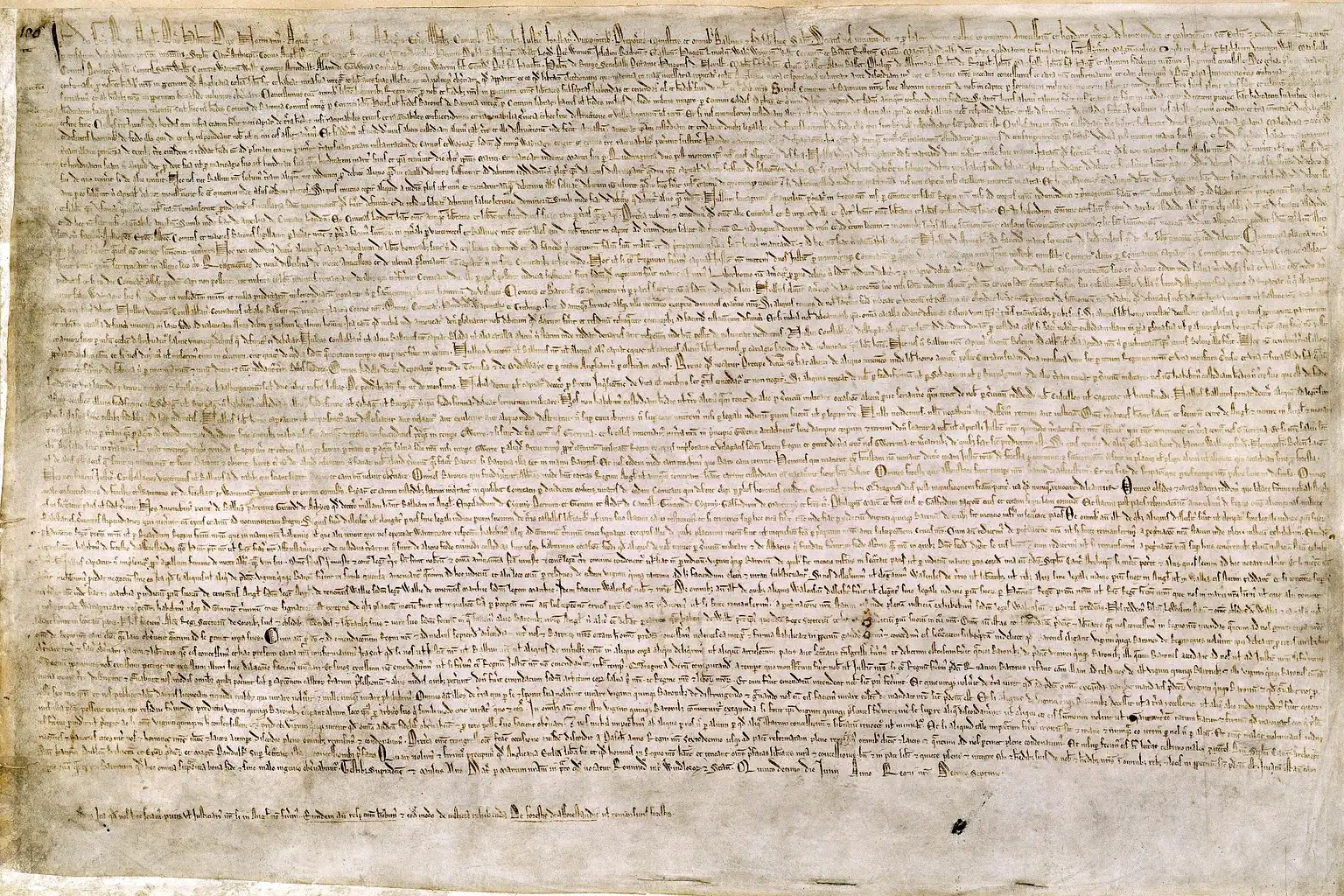
Until 1215, there were few formal limits on royal power. In that year, King John was forced by his noblemen to sign the Magna Carta — the Great Charter — which established that even the king was subject to the law. It restricted his power to collect taxes or change laws without the agreement of his nobles. This was a foundational moment for the rule of law in Britain. Parliament grew from the king's council of advisers, and gradually developed into two Houses: the House of Lords (nobility, great landowners and bishops) and the House of Commons (knights and wealthy townspeople, elected by a small proportion of the population). In Scotland a similar Parliament developed with three Houses called Estates: the lords, the commons and the clergy.
The Black Death
In 1348 a disease — probably a form of plague — arrived in Britain. Known as the Black Death, it killed one third of the population of England and a similar proportion in Scotland and Wales, making it one of the worst disasters ever to strike Britain. The aftermath reshaped society: labour shortages led peasants to demand higher wages, people moved from countryside to towns, and new social classes emerged — including a growing middle class and a class of large landowners later called the gentry.
Law, language and culture
The medieval period also saw important legal and cultural developments. English judges developed common law through precedent and tradition; Scotland codified its laws in writing. After the Norman Conquest, the ruling classes spoke Norman French while the peasants spoke Anglo-Saxon. Over time these merged into one English language — 'park' and 'beauty' come from Norman French; 'apple', 'cow' and 'summer' from Anglo-Saxon. By 1400, official documents were written in English and it had become the preferred language of the royal court and Parliament. Geoffrey Chaucer wrote The Canterbury Tales — poems about a group of pilgrims telling stories on their way to Canterbury — in this period. It was one of the first books printed by William Caxton, the first person in England to use a printing press. In Scotland, poets wrote in the Scots language, including John Barbour who wrote The Bruce about Bannockburn.
Architecture and trade
Castles were built across Britain and Ireland for defence — some, like Windsor and Edinburgh, are still in use today. Great cathedrals were built too, many featuring stained glass windows telling stories from the Bible. Lincoln Cathedral and York Minster are notable examples. England was also an important trading nation. English wool was a key export, and skilled workers came from abroad: weavers from France, engineers from Germany, glass manufacturers from Italy and canal builders from Holland.
The Wars of the Roses
In 1455, a civil war broke out between the House of Lancaster — whose symbol was a red rose — and the House of York — whose symbol was a white rose. This conflict, the Wars of the Roses, ended at the Battle of Bosworth Field in 1485. Richard III of York was killed, and Henry Tudor of Lancaster became King Henry VII. He then married Elizabeth of York, uniting the two families. Henry VII was the first king of the House of Tudor, whose symbol was a red rose with a white rose inside — signifying the alliance.
How to remember it
- Read the timeline in order: 1066 Norman Conquest, 1086 Domesday Book, 1215 Magna Carta, 1284 Statute of Rhuddlan, 1314 Bannockburn, 1348 Black Death, 1415 Agincourt, 1455 Wars of the Roses.
- The Black Death (1348) killed about one third of England's population.
Things to remember
- William the Conqueror defeated the English at the Battle of Hastings in 1066 and introduced the feudal system.
- The Statute of Rhuddlan (1284) annexed Wales to England; the Battle of Bannockburn (1314) left Scotland unconquered.
- Magna Carta (1215): King John was forced to sign — established that even the king is subject to the law.
- The Hundred Years War lasted 116 years — not 100.
- The Black Death (1348) killed one third of England's population and a similar proportion in Scotland and Wales.
- By 1400, English had become the language of official documents, the royal court and Parliament.
- Geoffrey Chaucer wrote The Canterbury Tales; William Caxton was the first person to print books in England.
- The Wars of the Roses (1455–1485) ended at Bosworth Field — Henry VII (Tudor) became king and married Elizabeth of York.
Tudors and Stuarts (1485 – 1714)
Two dynasties, 229 years, and a transformation of Britain's religious identity, political order and global ambition. The Tudor and Stuart period saw the Church of England founded, a king executed, a republic declared, and Parliament emerge permanently supreme.
In the Tudor and Stuart period, England broke with Rome, fought a civil war, executed a king — and emerged with Parliament holding permanent power over the Crown.
Henry VII and Henry VIII
Henry VII, the first Tudor king, deliberately strengthened central administration and reduced the power of the nobles to secure his position after the Wars of the Roses. His son Henry VIII continued centralising power and is most famous for two things: breaking away from the Church of Rome, and marrying six times. When the Pope refused to approve his divorce from Catherine of Aragon, Henry established the Church of England, with the king — not the Pope — holding the power to appoint bishops and direct worship. He also formally united Wales with England through the Act for the Government of Wales, after which Wales sent representatives to the House of Commons and had its legal system reformed.
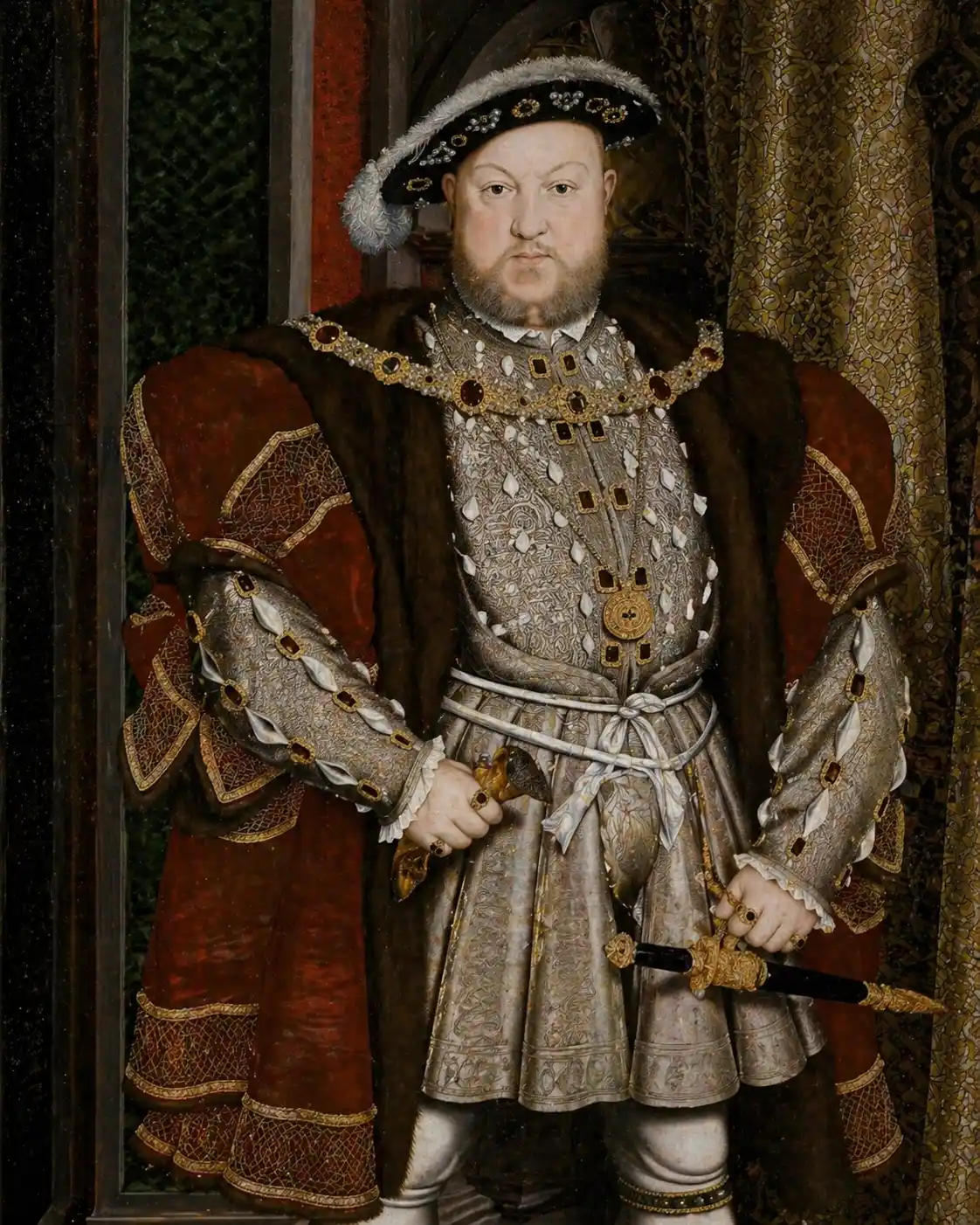
The six wives of Henry VIII, in order
- Catherine of Aragon (Spanish) — divorced; daughter Mary survived
- Anne Boleyn (English) — executed; daughter Elizabeth survived
- Jane Seymour — died after childbirth; son Edward survived
- Anne of Cleves (German) — divorced
- Catherine Howard — executed
- Catherine Parr — survived Henry; remarried but died soon after
The Reformation
Henry's break with Rome was part of a wider European movement called the Reformation — a challenge to the authority of the Pope and the practices of the Roman Catholic Church. Protestants read the Bible in their own languages instead of Latin, did not pray to saints, and believed that a personal relationship with God mattered more than Church authority. Protestant ideas gradually gained strength across England, Wales and Scotland during the 16th century. In Scotland, the predominantly Protestant Scottish Parliament abolished the authority of the Pope in 1560 and Roman Catholic religious services became illegal. A Protestant Church of Scotland was established — unlike the Church of England, it was not a state Church.
Edward VI, Mary I and Elizabeth I
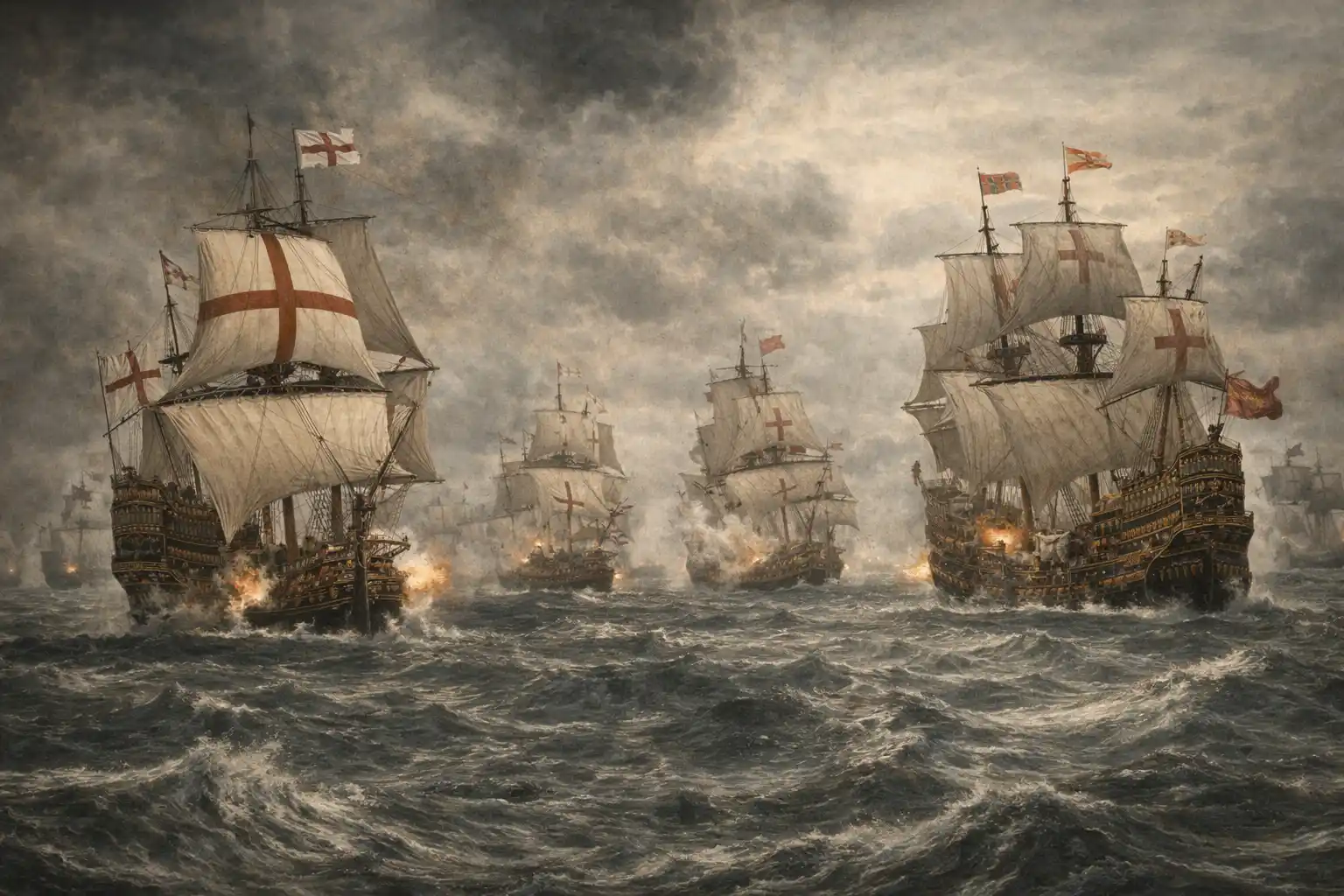
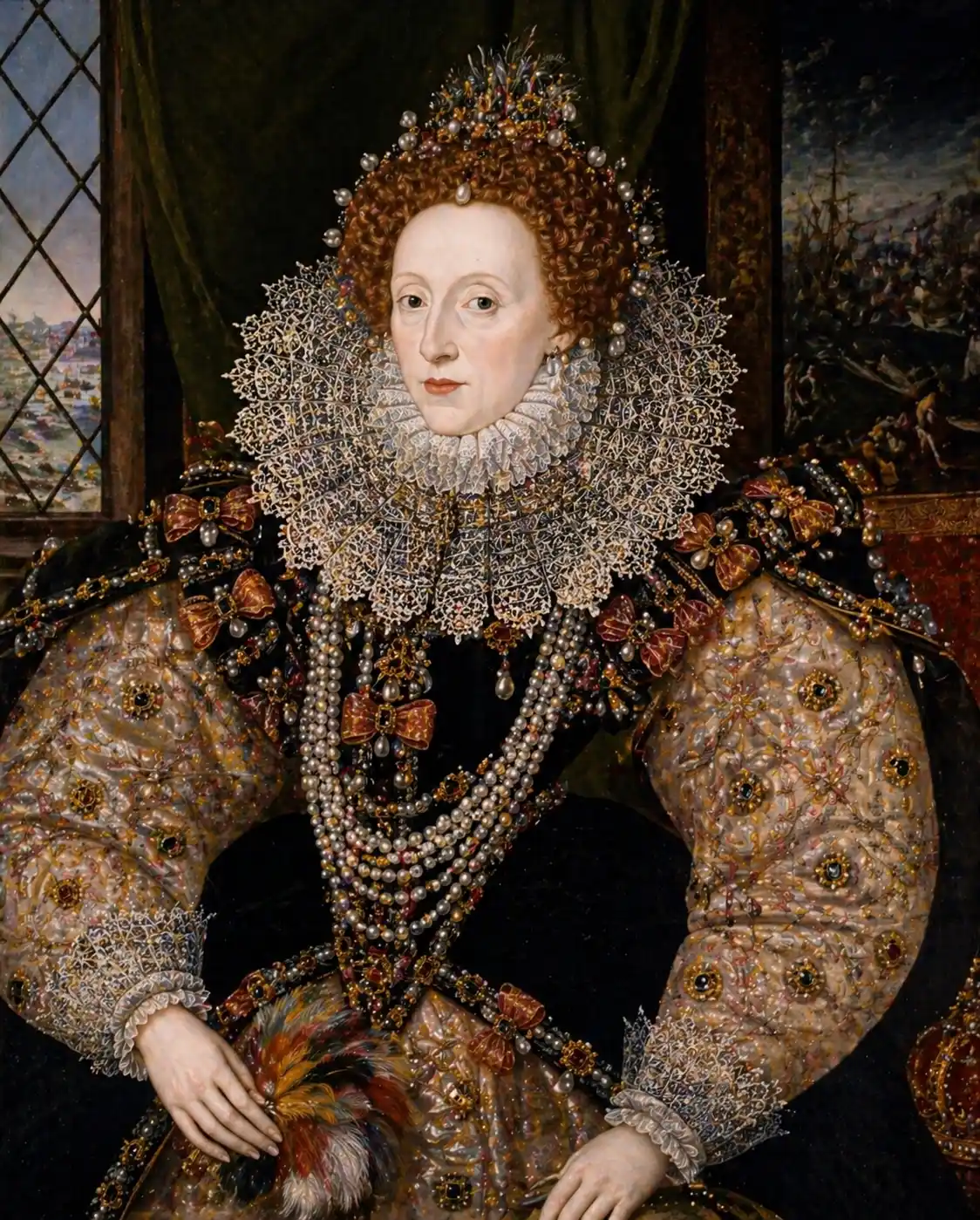
Henry was succeeded by his son Edward VI, who was strongly Protestant and oversaw the writing of the Book of Common Prayer, a version of which is still used today. Edward died at 15 after ruling for just over six years. His half-sister Mary I was a devout Catholic who persecuted Protestants, earning her the nickname 'Bloody Mary'. She too had a short reign. Elizabeth I, daughter of Henry VIII and Anne Boleyn, then became queen. A Protestant, she re-established the Church of England as the official Church. She found a careful balance between Catholics and more extreme Protestants, not demanding that people reveal their private beliefs. Her most celebrated moment came in 1588, when the English fleet defeated the Spanish Armada — a large fleet sent by Spain to conquer England and restore Catholicism. The victory made her one of the most popular monarchs in English history.
Mary, Queen of Scots
Scotland's queen, Mary Stuart — now known as Mary, Queen of Scots — was Catholic. She became queen as an infant when her father died and spent much of her childhood in France. On returning to Scotland she became embroiled in a power struggle. When her husband was murdered and she was suspected of involvement, she fled to England and gave her throne to her Protestant son, James VI. Mary was Elizabeth I's cousin and hoped for her support, but Elizabeth suspected her of wanting the English throne and imprisoned her for 20 years. Mary was eventually executed, accused of plotting against Elizabeth.
Elizabethan exploration and Shakespeare
Elizabeth's reign was also an era of growing national confidence. English explorers sought new trade routes and began colonising the eastern coast of America. Sir Francis Drake, one of the commanders in defeating the Armada, was among the first to circumnavigate the world aboard his ship, the Golden Hind. It was also an age of literary richness. William Shakespeare, born in Stratford-upon-Avon in 1564, was a playwright and actor whose works — including A Midsummer Night's Dream, Hamlet, Macbeth and Romeo and Juliet — had a profound influence on the English language. He was one of the first writers to portray ordinary people, not just royalty, and invented many words still in common use today.
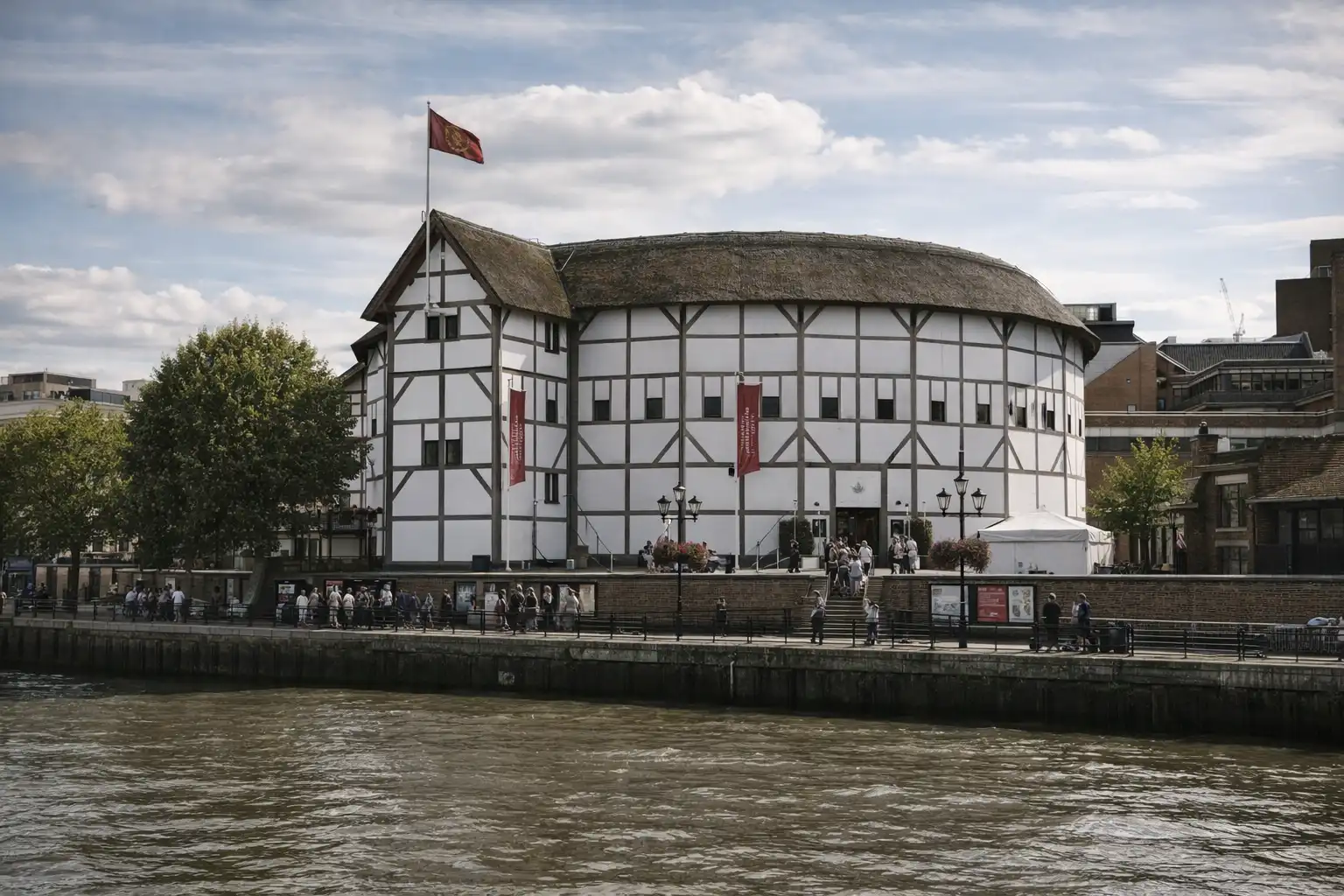
James I, the Bible and the Gunpowder Plot
Elizabeth died in 1603 with no children. Her heir was James VI of Scotland, who became James I of England, Wales and Ireland — though all four countries remained legally separate. In 1611, he commissioned a new English translation of the Bible, known as the King James Version or Authorised Version, which is still used in many Protestant churches today. In 1605, a group of Catholics angry at growing repression against their faith planned to kill the king with a bomb in the Houses of Parliament. The Gunpowder Plot failed. One of the conspirators, Guy Fawkes, was caught in the cellars with barrels of gunpowder. The king's survival is still celebrated on Bonfire Night.
Charles I and the Civil War
James's son Charles I became king in 1625 believing in the Divine Right of Kings — that the monarch was directly appointed by God and could rule without Parliament's approval. When Parliament refused to grant him money, he dissolved it and ruled without it for 11 years. After trouble in Scotland, he was forced to recall Parliament, which was dominated by Puritans — strict Protestants who opposed his religious policies. Charles entered the House of Commons to arrest five parliamentary leaders; they had been warned and escaped. No monarch has set foot in the Commons since. Civil war broke out in 1642 between the Cavaliers (king's supporters) and the Roundheads (Parliament's supporters). The king's army was defeated at Marston Moor and Naseby. Charles was captured, refused to compromise and was executed in 1649.
Cromwell and the Restoration
England declared itself a republic — the Commonwealth — and Oliver Cromwell emerged as its leader, taking the title Lord Protector. He ruled until his death in 1658. His son Richard succeeded him but failed to control the army or government. After 11 years as a republic, there was no clear successor and people wanted stability. In May 1660, Parliament invited Charles II back from exile in the Netherlands. He was crowned king of England, Wales, Scotland and Ireland. The Church of England was re-established as the official Church, and both Roman Catholics and Puritans were excluded from power.
Plague, fire and science
Charles II's reign saw London struck by plague in 1665 — thousands died, especially in poorer areas — and then devastated by the Great Fire in 1666, which destroyed much of the city including St Paul's Cathedral. A new St Paul's was designed by Sir Christopher Wren. Samuel Pepys wrote about both events in a diary still read today. In 1679, the Habeas Corpus Act became law, guaranteeing that no one could be held prisoner unlawfully and that every prisoner has a right to a court hearing. Charles II was also interested in science and founded the Royal Society to promote natural knowledge — it remains the oldest surviving scientific society in the world. Its early members included Sir Edmund Halley (who predicted the return of Halley's Comet) and Sir Isaac Newton, born in Lincolnshire in 1643. Newton's Principia Mathematica showed how gravity applied to the whole universe; he also discovered that white light contains the colours of the rainbow.
The Glorious Revolution
Charles II died in 1685 without legitimate children. His Catholic brother James II became king. James favoured Catholics — allowing them to serve as army officers, which Parliament had forbidden — arrested Church of England bishops, and refused to seek agreement with Parliament. When his wife had a son, the prospect of a Catholic succession alarmed Protestants. James's elder daughter Mary was married to William of Orange, the Protestant ruler of the Netherlands. In 1688, leading Protestants invited William to invade. He arrived with no resistance; James fled to France. William became William III and ruled jointly with Mary. This was later called the Glorious Revolution — there was no fighting in England, and it permanently guaranteed the power of Parliament over the Crown.
After the Glorious Revolution
James II invaded Ireland in 1690 with a French army, hoping to reclaim his throne. William defeated him at the Battle of the Boyne — an event still celebrated by some in Northern Ireland today. In Scotland, all clans were required to take an oath accepting William as king. The MacDonalds of Glencoe were late in doing so and were killed — the Glencoe Massacre created lasting distrust of the new government among many Scots. Those who remained loyal to James became known as Jacobites.
How to remember it
- Henry VIII's six wives in order: divorced, executed, died, divorced, executed, survived (Catherine of Aragon, Anne Boleyn, Jane Seymour, Anne of Cleves, Catherine Howard, Catherine Parr).
- Charles I is the only British king ever executed.
- Key dates in order: 1534 Church of England, 1588 Armada, 1603 Union of Crowns, 1605 Gunpowder Plot, 1649 Charles I executed.
Things to remember
- Henry VIII established the Church of England after the Pope refused to approve his divorce from Catherine of Aragon.
- His six wives in order: Catherine of Aragon (divorced), Anne Boleyn (executed), Jane Seymour (died), Anne of Cleves (divorced), Catherine Howard (executed), Catherine Parr (survived).
- Elizabeth I defeated the Spanish Armada in 1588 and became one of the most popular monarchs in English history.
- Shakespeare was born in Stratford-upon-Avon in 1564 and invented many words still in use today.
- The Gunpowder Plot (1605): Catholics including Guy Fawkes tried to blow up Parliament — the plot failed.
- No monarch has entered the House of Commons since Charles I's failed attempt to arrest five MPs.
- Charles I was executed in 1649 — the only British king ever to be executed.
- The Habeas Corpus Act (1679) guarantees that no one can be held prisoner unlawfully.
- The Glorious Revolution (1688): William of Orange invited to rule; Parliament's power permanently guaranteed.
- The Battle of the Boyne (1690) is still celebrated by some in Northern Ireland today.
Union, Empire and Reform (1707 – 1901)
In less than two centuries, Britain became the largest empire the world had ever seen, led the Industrial Revolution, and began the long democratic journey towards universal suffrage. This section covers the union with Scotland and Ireland, the Enlightenment, industry, slavery, and the steady expansion of who could vote.
From a small island nation, Britain built the largest empire the world has ever seen — while simultaneously transforming how goods were made, how people lived, and who had the right to govern.
The Bill of Rights and constitutional monarchy
At the coronation of William and Mary, a Declaration of Rights was read which confirmed that the king could no longer raise taxes or administer justice without Parliament's agreement. The Bill of Rights of 1689 formalised this, establishing constitutional monarchy. Parliament took control of who could be monarch — who must be Protestant — and required a new Parliament to be elected at least every three years (later seven, now five). Two main groups emerged in Parliament: the Whigs and the Tories. The Tories are the origin of the modern Conservative Party. From 1695, newspapers were allowed to operate without a government licence, marking the beginning of a free press.
The Act of Union with Scotland (1707)
When William and Mary's successor, Queen Anne, died without surviving children, the succession was uncertain. The Act of Union of 1707 — called the Treaty of Union in Scotland — created the Kingdom of Great Britain. Scotland was no longer an independent country but kept its own legal system, education system and Presbyterian Church. George I, a German who did not speak good English, became king in 1714 as Anne's nearest Protestant relative. His need to rely on ministers gave rise to the office of Prime Minister. The first to hold that title was Sir Robert Walpole, who served from 1721 to 1742.
Jacobite rebellions and the Highland Clearances
The Jacobite cause — loyalty to the exiled Stuart line — continued to flare. In 1745, Charles Edward Stuart ('Bonnie Prince Charlie'), grandson of James II, landed in Scotland, gathered Highland support and marched south. He was defeated at the Battle of Culloden in 1746 and fled to Europe. After Culloden, the clan system was dismantled. Chieftains became landlords; clansmen became tenants who had to pay for their land. Landlords destroyed small farms — known as crofts — to make space for sheep and cattle. This process, the Highland Clearances, drove many Scots to leave for North America in the early 19th century.
The Enlightenment
The 18th century was a time of extraordinary intellectual progress, known as the Enlightenment. Many of its great thinkers were Scottish. Adam Smith developed ideas about economics still referred to today. David Hume's ideas about human nature continue to influence philosophers. James Watt's work on steam power helped drive the Industrial Revolution. The central principle of the Enlightenment — that everyone should have the right to their own political and religious beliefs, free from state dictation — remains an important value in the UK today.
The Industrial Revolution
Britain was the first country to industrialise on a large scale. The Industrial Revolution — powered by machinery and steam — transformed agriculture and manufacturing, moving millions of people from rural life into the mining and factory towns of the north and Midlands. Richard Arkwright, who began as a barber before moving into textiles, improved the carding machine, developed horse-driven spinning mills, and later used steam engines to power machinery. He is remembered for the efficient and profitable way he ran his factories. The Bessemer process enabled mass production of steel, driving shipbuilding and the railways. George and Robert Stephenson, father and son, pioneered the railway engine, and a major expansion of railways took place in the Victorian era. The engineer Isambard Kingdom Brunel, from Portsmouth, built the Great Western Railway — the first major railway in Britain, running from Paddington to the south west, West Midlands and Wales — as well as tunnels, bridges and ships. Many of his bridges are still in use.
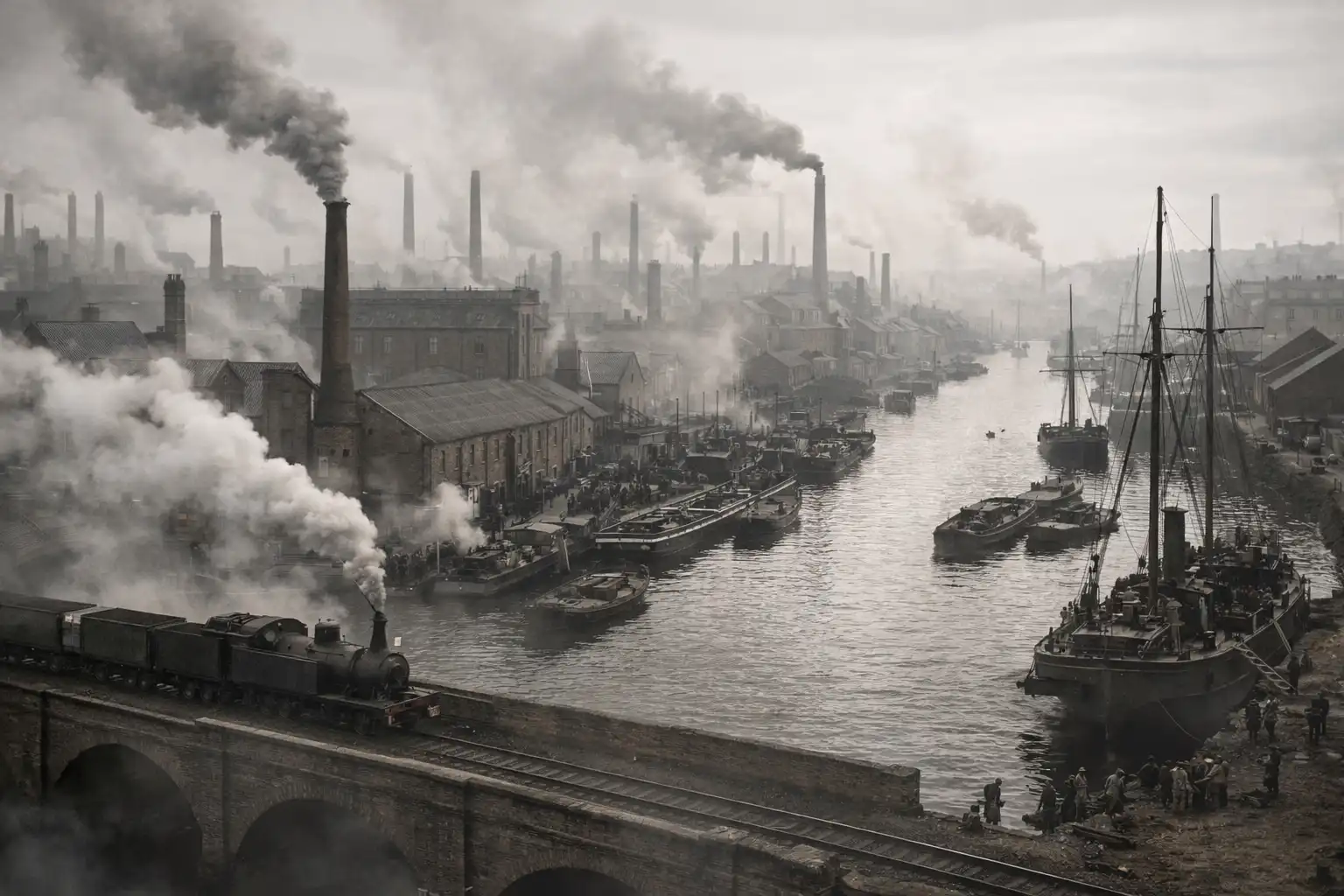
The slave trade and abolition
During the 18th century, Britain was deeply involved in the triangular slave trade. Ships left British ports laden with cloth and iron, exchanged these for slaves in Africa, and transported the enslaved to the Americas where they were sold for sugar, tobacco and other goods. Conditions on the ships were extremely poor and many died during the voyage. Some people, including the Quakers, opposed slavery. William Wilberforce, an Evangelical Christian MP, led the parliamentary campaign against it. In 1807, it became illegal to trade slaves in British ships or from British ports. In 1833, the Emancipation Act abolished slavery throughout the British Empire. The Royal Navy intercepted slave ships from other countries, freed the enslaved and punished the traders. After 1833, around 2 million Indian and Chinese workers were employed to replace freed slaves — on sugar plantations in the Caribbean, in mines in South Africa, on railways in East Africa and in the army in Kenya.
Wars, unions and the flag
Britain fought a number of major conflicts in this period. The American colonists declared independence in 1776, stating that people had the right to establish their own governments. Britain recognised their independence in 1783. Admiral Nelson defeated the combined French and Spanish fleets at the Battle of Trafalgar in 1805 — though he was killed in the battle. Nelson's Column in Trafalgar Square and HMS Victory in Portsmouth are his monuments. The Duke of Wellington — later called the Iron Duke — defeated Napoleon at the Battle of Waterloo in 1815, ending the French Wars. Ireland was unified with Great Britain by the Act of Union of 1800, creating the United Kingdom of Great Britain and Ireland in 1801. This brought a new version of the Union Flag: it combines the crosses of St George (red cross on white, England), St Andrew (diagonal white cross on blue, Scotland) and St Patrick (diagonal red cross on white, Ireland). The Welsh dragon does not appear because Wales was already united with England when the first flag was created in 1606.
Sake Dean Mahomet
Sake Dean Mahomet (1759–1851) was born in 1759 and grew up in the Bengal region of India. He served in the Bengal army and came to Britain in 1782. In 1810 he opened the Hindoostane Coffee House in George Street, London — the first curry house to open in Britain. Mahomet and his wife also introduced 'shampooing', the Indian art of head massage, to Britain.
The Victorian Age
Queen Victoria came to the throne in 1837 at the age of 18 and reigned for almost 64 years until 1901 — the longest reign of any British monarch at the time of writing. During her reign the British Empire grew to cover all of India, Australia and large parts of Africa, with an estimated population of more than 400 million people. Between 1853 and 1913, around 13 million British citizens emigrated. Between 1870 and 1914, some 120,000 Russian and Polish Jews came to Britain to escape persecution, settling mainly in London's East End, Manchester and Leeds. In 1851 the Great Exhibition opened in the Crystal Palace in Hyde Park — a vast building of steel and glass whose exhibits included huge machines and handmade goods from around the world, most of them made in Britain. Working conditions improved: in 1847 a law limited women and children to 10 hours of work per day. The government adopted free trade, repealing the Corn Laws in 1846 to allow cheaper grain imports. The Crimean War (1853–56) saw Britain fight alongside Turkey and France against Russia. Queen Victoria introduced the Victoria Cross to honour acts of valour. Florence Nightingale, born in Italy to English parents and trained as a nurse in Germany, went to Turkey in 1854 to care for soldiers in military hospitals. She improved conditions and reduced the mortality rate significantly. In 1860 she established the Nightingale Training School for nurses at St Thomas' Hospital in London — the first of its kind. She is regarded as the founder of modern nursing.
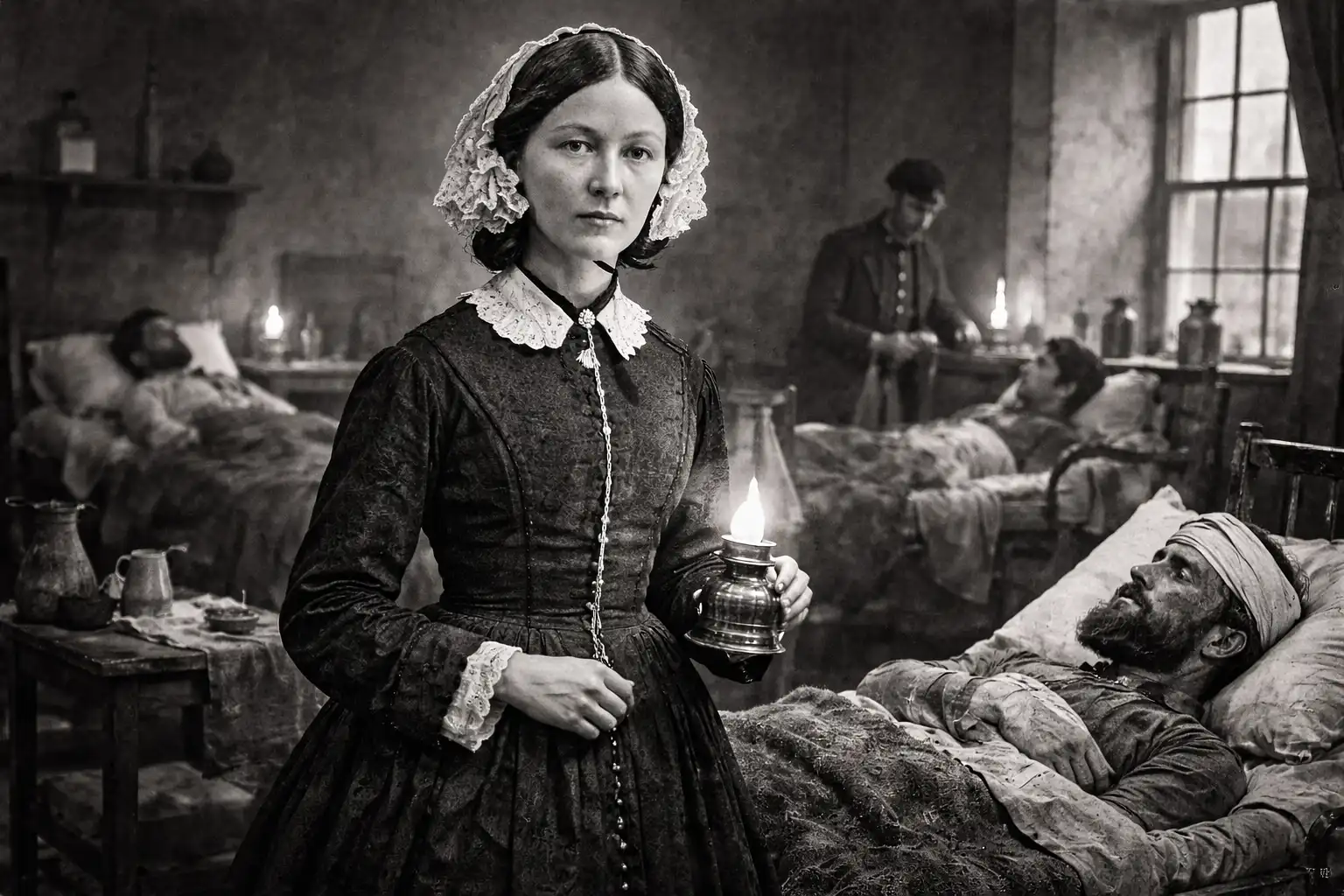
Ireland and democratic reform
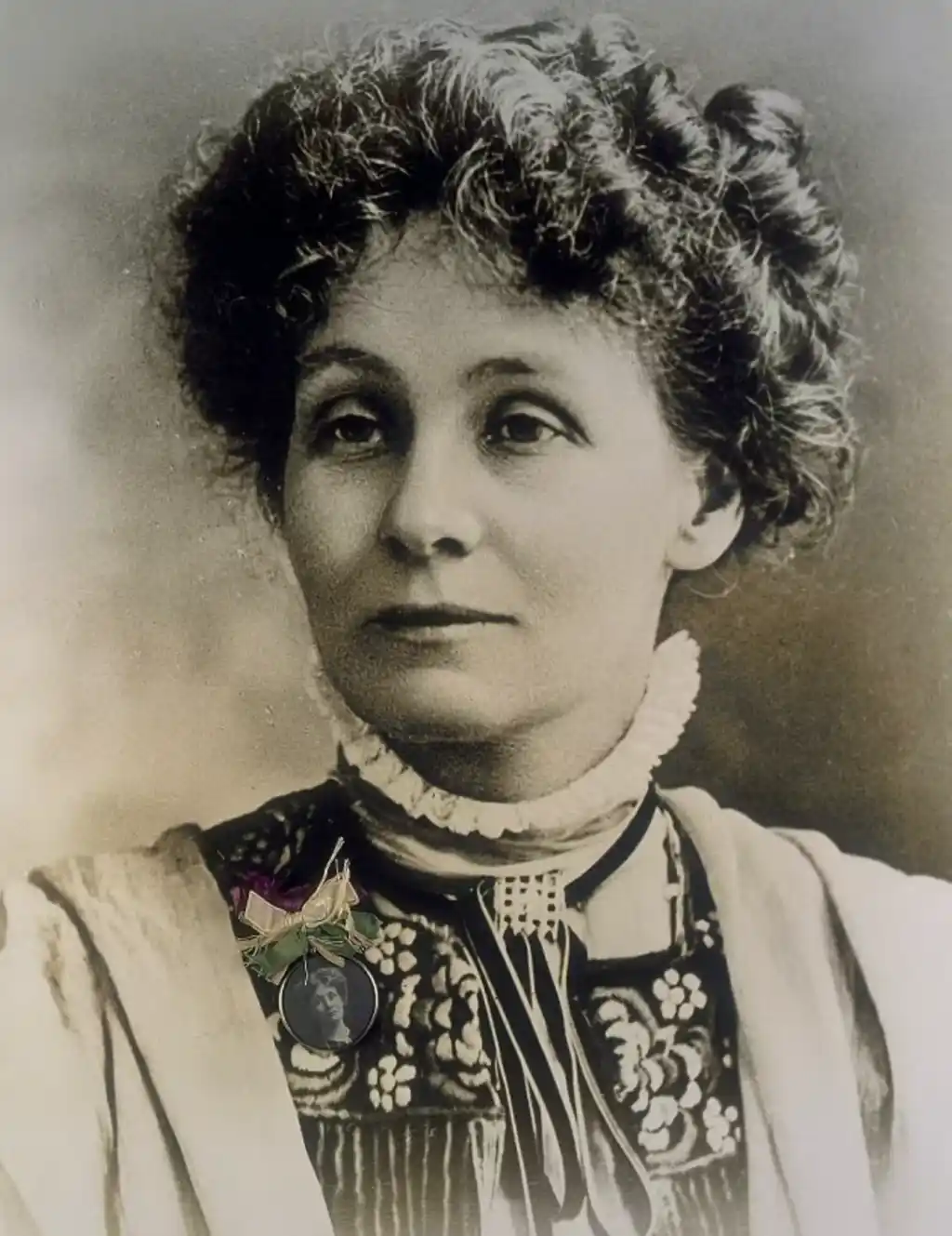
Conditions in Ireland were far worse than in the rest of the UK. Two-thirds of the population depended on farming, often on small plots. When the potato crop failed in the mid-19th century, one million people died from disease and starvation and one and a half million emigrated — many to the United States, others to English cities. By 1861, large Irish communities had formed in Liverpool, London, Manchester and Glasgow. Irish nationalist sentiment grew strongly. The Fenians sought complete independence; Charles Stuart Parnell advocated Home Rule — an Irish Parliament within the UK. In the 1830s and 1840s, a group called the Chartists campaigned for democratic reform. They wanted six changes: every man to have the vote, elections every year, equal regions in the electoral system, secret ballots, any man to be able to stand as an MP, and MPs to be paid. At the time the campaign was seen as a failure, but by 1918 most of these reforms had been adopted. The democratic franchise also expanded through the 19th century. The Great Reform Act of 1832 (also called the Representation of the People Act) greatly increased the number of voters and gave representation to large cities. Further Reform Acts in 1867 and 1884 extended the vote to urban and then rural working men. Women, however, still could not vote. Emmeline Pankhurst, born in Manchester in 1858, set up the Women's Franchise League in 1889 (which fought for the vote for married women in local elections) and in 1903 helped found the Women's Social and Political Union (WSPU) — the first group whose members were called 'suffragettes'. The group used civil disobedience to campaign for the vote, including chaining themselves to railings and going on hunger strike.
How to remember it
- Two Acts of Union, two dates: 1707 and 1801.
- The slave trade on British ships was abolished in 1807, and slavery throughout the Empire in 1833.
- Trafalgar (1805) means Nelson, who was killed. Waterloo (1815) means Wellington, who defeated Napoleon.
- The Union Flag combines the crosses of St George, St Andrew and St Patrick. Wales is not included.
Things to remember
- The Bill of Rights (1689) established constitutional monarchy — Parliament controlled who could be monarch and they must be Protestant.
- The Act of Union (1707) created the Kingdom of Great Britain; Scotland kept its own legal system, education system and Church.
- The first Prime Minister was Sir Robert Walpole (1721–1742).
- Bonnie Prince Charlie was defeated at the Battle of Culloden in 1746.
- Key Enlightenment thinkers: Adam Smith (economics), David Hume (philosophy), James Watt (steam power).
- Slave trade abolished in British ships in 1807 (Wilberforce); slavery abolished throughout the Empire in 1833.
- Sake Dean Mahomet: born 1759 in the Bengal region of India; came to Britain in 1782; in 1810 opened the Hindoostane Coffee House in George Street, London — the first curry house to open in Britain. He and his wife introduced 'shampooing' (the Indian art of head massage) to Britain.
- Battle of Trafalgar (1805): Admiral Nelson defeated French and Spanish fleet but was killed.
- Battle of Waterloo (1815): Duke of Wellington defeated Napoleon.
- Act of Union (1801) created the United Kingdom of Great Britain and Ireland.
- The Union Flag combines St George (England), St Andrew (Scotland) and St Patrick (Ireland) — Wales is not included.
- Queen Victoria reigned 1837–1901; the Empire had more than 400 million people.
- Florence Nightingale founded the Nightingale Training School at St Thomas' Hospital in 1860 — regarded as founder of modern nursing.
- The Great Reform Act (1832) greatly expanded the electorate and gave representation to large industrial cities.
- The Chartists (1830s–1840s) campaigned for six democratic reforms — including votes for every man and secret ballots. By 1918 most had been adopted.
- Emmeline Pankhurst: born Manchester 1858; set up the Women's Franchise League (1889) and helped found the Women's Social and Political Union (WSPU) in 1903 — the first group whose members were called 'suffragettes'.
The World Wars and Social Change (1900 – 1945)
The first half of the 20th century opened in optimism and ended in exhaustion. Two catastrophic world wars, the partition of Ireland, the Great Depression and the emergence of the welfare state all fell within a single generation.
Britain entered the 20th century as a global superpower and emerged from it shaped by two world wars, mass death and the birth of the welfare state.
Early 20th century progress
The early 20th century was a time of optimism. Britain was a global superpower with an expansive Empire, a well-admired navy, thriving industry and strong political institutions. Social progress accompanied this confidence: financial help for the unemployed, old-age pensions and free school meals were introduced. Workplace safety laws improved. Local government became more democratic, and MPs received a salary for the first time, making public life more accessible.
The First World War (1914–1918)
On 28 June 1914, Archduke Franz Ferdinand of Austria was assassinated, triggering a chain of events that led to the First World War. Deeper causes included growing nationalism across Europe, increasing militarism, imperial rivalry and the division of the major powers into two armed camps. Britain was part of the Allied Powers, which included France, Russia, Japan, Belgium and Serbia — and later Greece, Italy, Romania and the United States. They fought against the Central Powers: Germany, the Austro-Hungarian Empire, the Ottoman Empire and Bulgaria. The whole of the British Empire was involved: more than a million Indians fought on behalf of Britain, with around 40,000 killed. Men from the West Indies, Africa, Australia, New Zealand and Canada all fought with the British. The war's casualties were staggering — more than 2 million British casualties in all. The British attack on the Somme in July 1916 alone resulted in around 60,000 casualties on the first day. The war ended at 11.00 am on 11 November 1918 with victory for Britain and its allies.
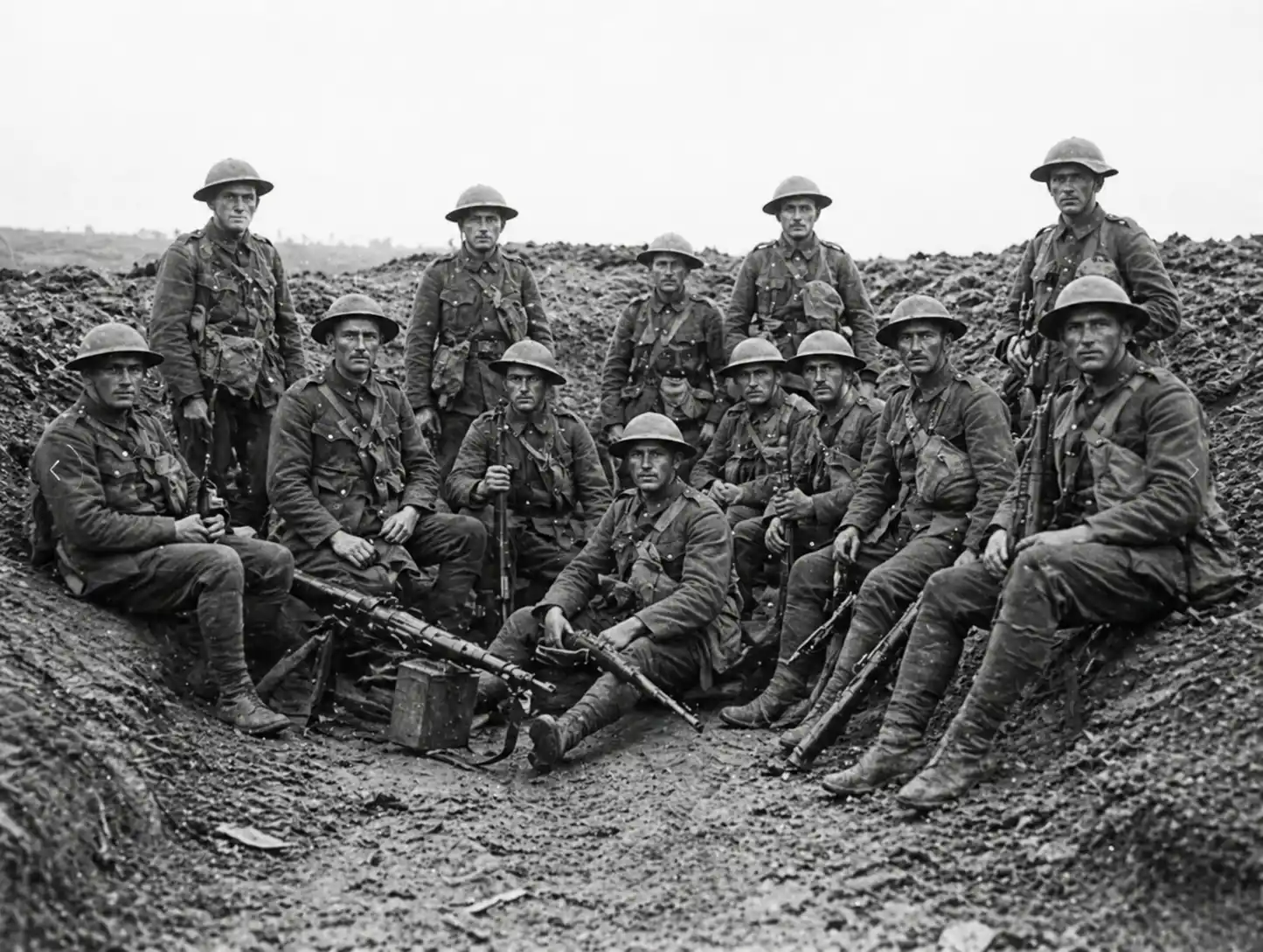
Women and the vote
Women's contribution to the war effort was significant — taking on roles in industry, transport and public services previously closed to them. In 1918, women over the age of 30 were given voting rights and the right to stand for Parliament, partly in recognition of this contribution. In 1928, women received the vote on the same terms as men — at 21.
Partition of Ireland
In 1913, the British government had promised Home Rule for Ireland — a self-governing Irish Parliament within the UK — but the outbreak of war postponed it. Irish Nationalists would not wait: in 1916 the Easter Rising broke out in Dublin against British rule. Its leaders were executed under military law, which hardened nationalist sentiment. A guerrilla war followed, and in 1921 a peace treaty was signed. In 1922, Ireland became two countries. Six counties in the north, predominantly Protestant, remained part of the UK as Northern Ireland. The rest became the Irish Free State, with its own government. In 1949 it became a republic. Those opposed to the partition engaged in years of violence known as 'the Troubles'.
The inter-war period
The 1920s brought improvement in living conditions and public housing. But in 1929 the world entered the Great Depression, causing mass unemployment in parts of the UK. Traditional heavy industries such as shipbuilding were badly affected; new industries including automobiles and aviation developed. Those in work benefited from falling prices — car ownership doubled from 1 million to 2 million between 1930 and 1939. The BBC began radio broadcasts in 1922 and launched the world's first regular television service in 1936.
The Second World War (1939–1945)
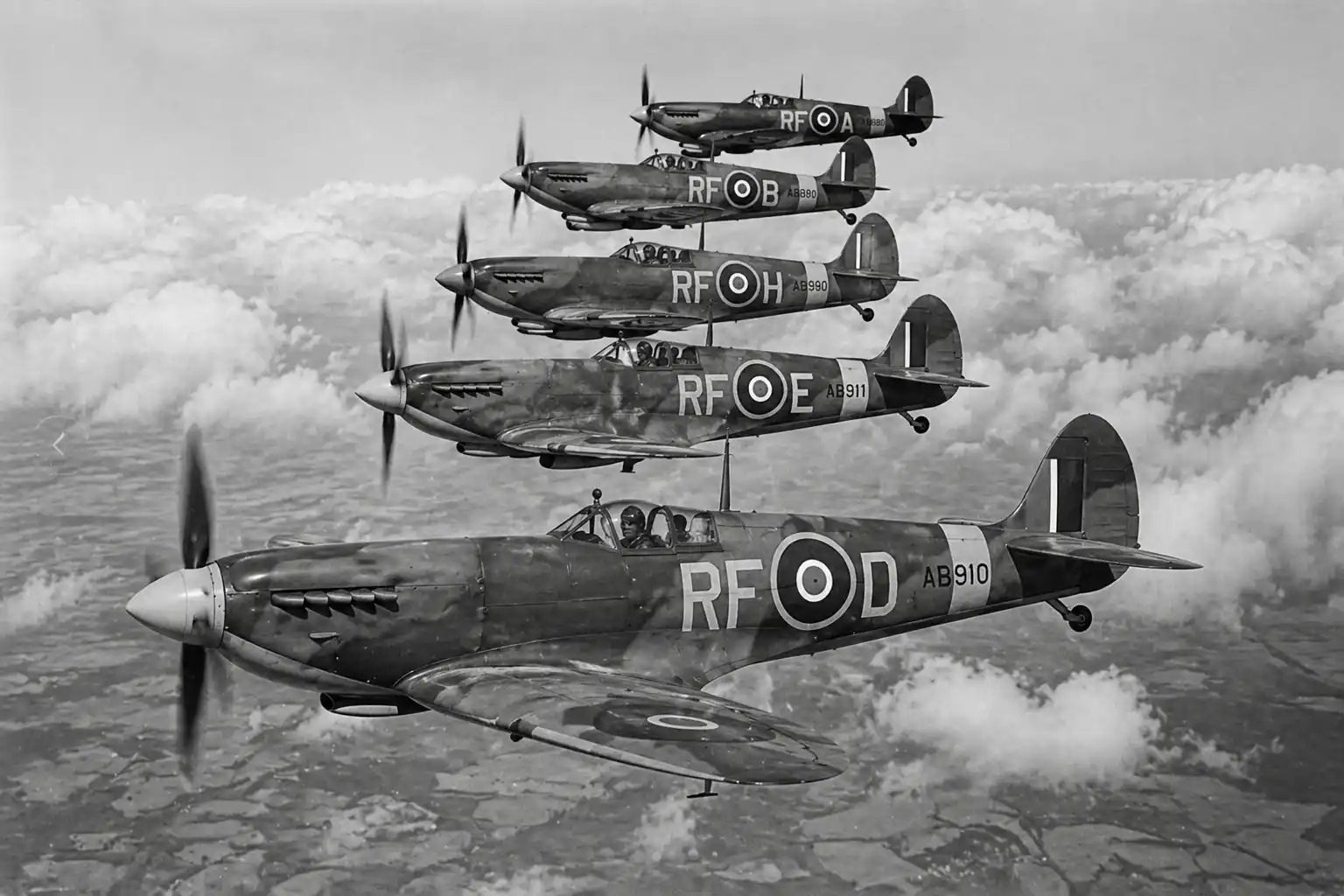
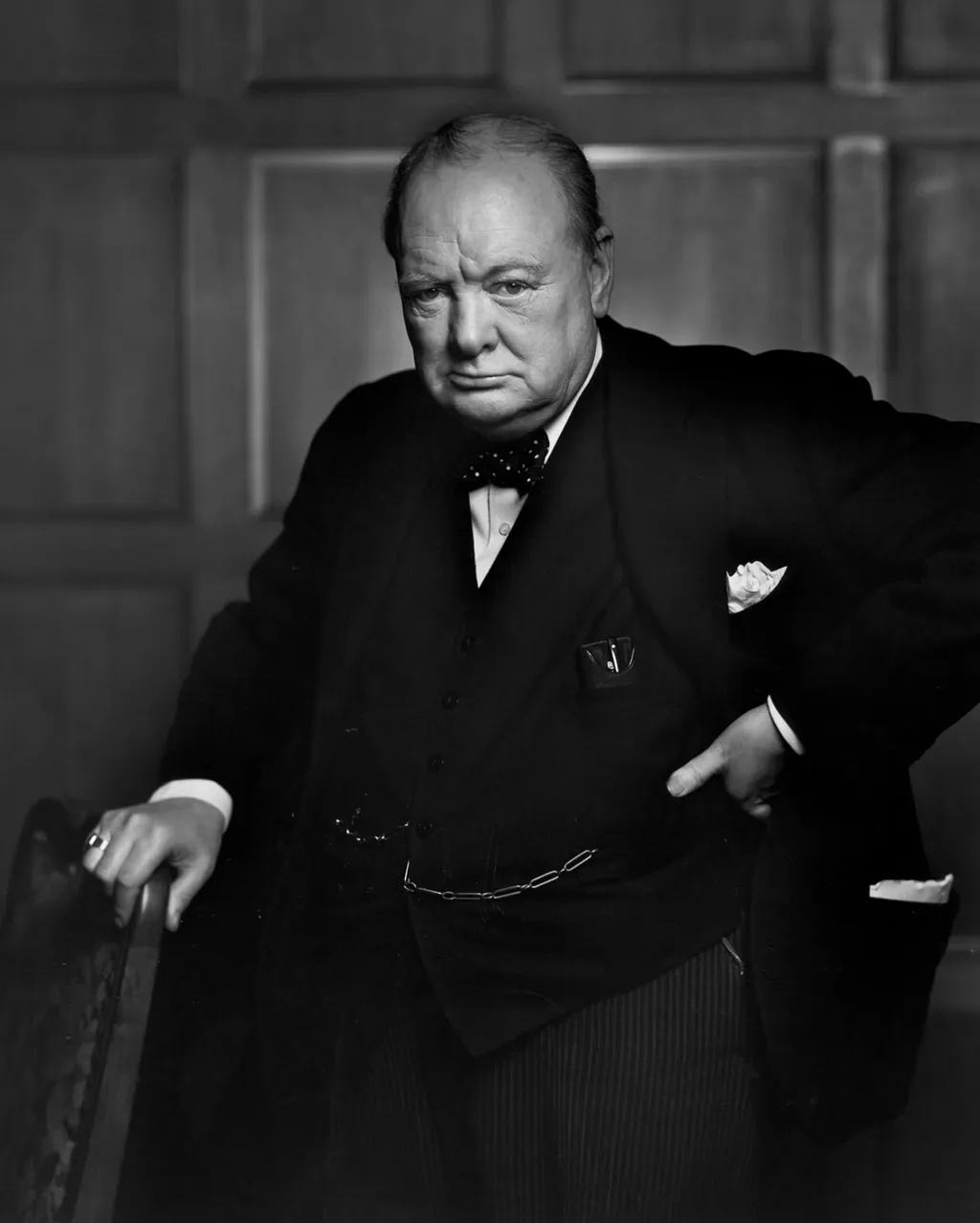
Adolf Hitler came to power in Germany in 1933, believing the conditions imposed after WWI were unfair and determined to conquer more land. When Hitler invaded Poland in 1939, Britain and France declared war. After German forces swept through Belgium, the Netherlands and France in 1940, Winston Churchill became Prime Minister in May of that year. He refused to surrender to the Nazis and became an inspirational wartime leader. A massive naval and civilian operation evacuated more than 300,000 British and French soldiers from the beaches of Dunkirk — a feat that became known as the 'Dunkirk spirit'. From June 1940 to June 1941, Britain and the Empire stood almost alone against Nazi Germany. In the Battle of Britain that summer, the Royal Air Force — flying Spitfires and Hurricanes, both designed and built in Britain — defeated the German air campaign to control the skies. The German Blitz then brought sustained bombing of British cities at night. Coventry was almost totally destroyed; the East End of London suffered enormous damage. The resilience shown gave rise to the 'Blitz spirit'.
The United States entered the war after Japan bombed the American naval base at Pearl Harbour in December 1941. Hitler's invasion of the Soviet Union that same year opened a catastrophic eastern front that ultimately weakened Germany decisively. Allied victories in North Africa and Italy followed. On 6 June 1944 — D-Day — Allied forces landed in Normandy and pressed through France into Germany. Germany was defeated in May 1945. The war in the Pacific ended in August 1945 when the United States dropped atomic bombs on Hiroshima and Nagasaki. British scientists, led by Ernest Rutherford working at Manchester and Cambridge, had been the first to split the atom and contributed to the Manhattan Project that developed the bomb.
Winston Churchill
Born in 1874, Churchill was the son of a politician, and served as a soldier and journalist before becoming a Conservative MP in 1900. He became Prime Minister in May 1940, refused to surrender to the Nazis and proved an inspirational leader. He lost the 1945 election but returned as PM in 1951. He remained an MP until 1964 and died in 1965, receiving a state funeral. In 2002 he was voted the greatest Briton of all time.
“Never in the field of human conflict was so much owed by so many to so few.”
Alexander Fleming and penicillin
Alexander Fleming, born in Scotland in 1881, discovered penicillin in 1928 while researching influenza. It was further developed into a usable drug by Howard Florey and Ernst Chain, and was in mass production by the 1940s. Fleming won the Nobel Prize in Medicine in 1945. Penicillin is still used to treat bacterial infections today.
How to remember it
- The First World War began after the assassination of Archduke Franz Ferdinand on 28 June 1914 and ended at 11.00 am on 11 November 1918.
- Dunkirk rescued more than 300,000 soldiers. D-Day was 6 June 1944.
- Ireland was partitioned in 1922: Northern Ireland stayed in the UK, and the rest became the Irish Free State, then a republic in 1949.
Things to remember
- WWI was triggered by the assassination of Archduke Franz Ferdinand on 28 June 1914.
- More than 2 million British casualties in WWI; around 60,000 on the first day of the Somme (July 1916).
- WWI ended at 11.00 am on 11 November 1918.
- Women over 30 received the vote in 1918, partly in recognition of their contribution to the war effort; equal voting rights (age 21) came in 1928.
- The Easter Rising (1916) and subsequent conflict led to Ireland being partitioned in 1922: Northern Ireland remained in the UK; the rest became the Irish Free State, then a republic in 1949.
- Churchill became Prime Minister in May 1940; he was voted greatest Briton of all time in 2002.
- The Dunkirk evacuation rescued more than 300,000 soldiers.
- The Battle of Britain was fought with Spitfires and Hurricanes — both designed and built in Britain.
- D-Day: Allied forces landed in Normandy on 6 June 1944.
- Alexander Fleming discovered penicillin in 1928 and won the Nobel Prize in Medicine in 1945.
Modern Britain (1945 – Present)
Post-war Britain rebuilt itself with the welfare state, shed its empire, experienced social revolution in the 1960s, grappled with economic crisis in the 1970s, and moved through political transformation into the 21st century.
The Britain that emerged from the Second World War was determined to build something new — free healthcare, social security, and a fairer society from cradle to grave.
The welfare state
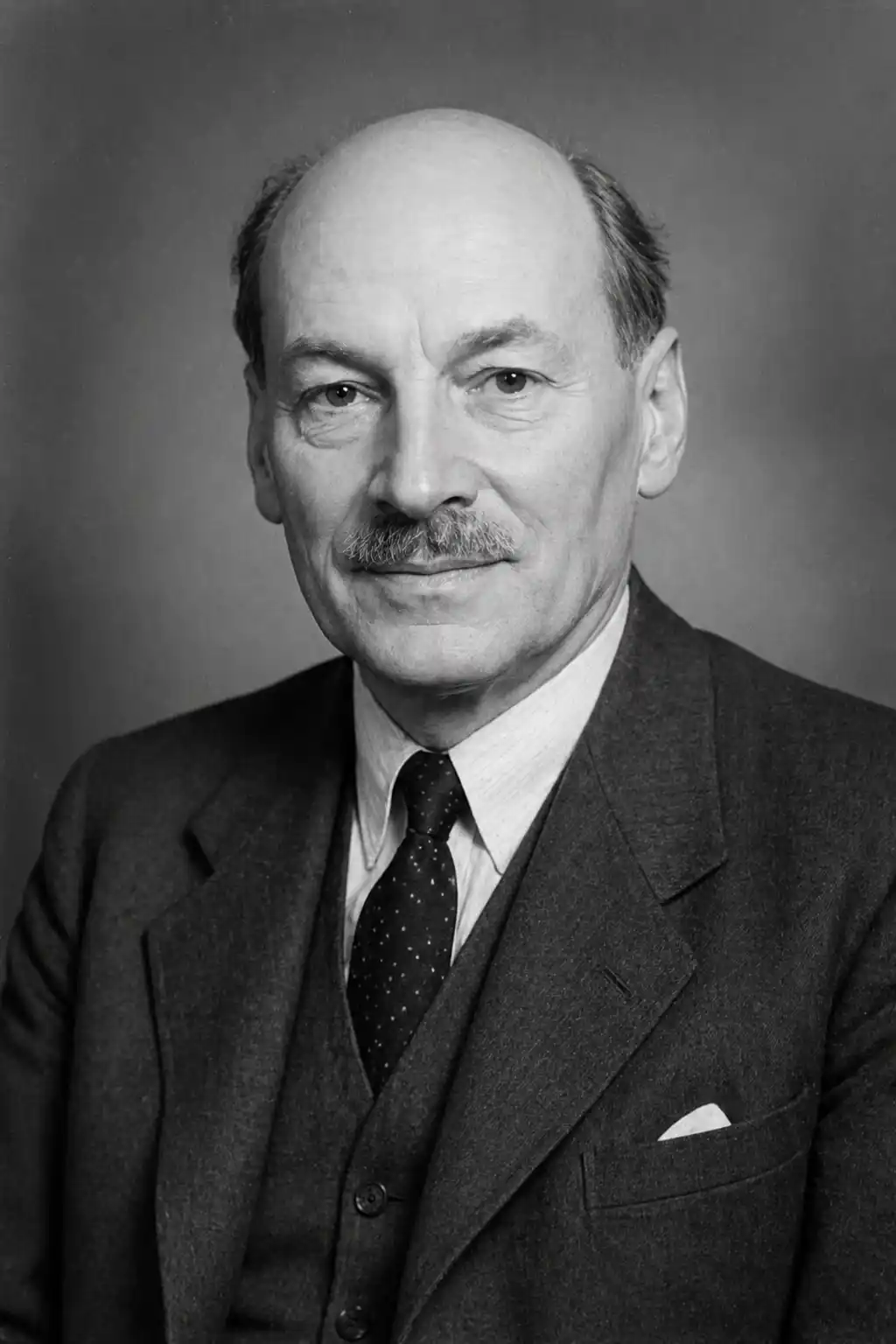
Although Britain had won the war, the country was economically exhausted and people wanted change. In 1945, the Labour Party won the general election and Clement Attlee became Prime Minister. His government was committed to the welfare state outlined in the Beveridge Report. William Beveridge, a British economist and social reformer, had produced the report in 1942. It was commissioned by the wartime government in 1941 and recommended that the government should fight the five Giant Evils: Want, Disease, Ignorance, Squalor and Idleness. In 1948, Aneurin (Nye) Bevan, the Minister for Health, established the National Health Service — guaranteeing a minimum standard of healthcare for all, free at the point of use. A national system of benefits was also introduced to protect the population from the 'cradle to the grave'. Attlee's government nationalised the railways, coal mines and gas, water and electricity supplies, and also implemented the Education Act 1944, overseen by R A Butler, which introduced free secondary education in England and Wales.
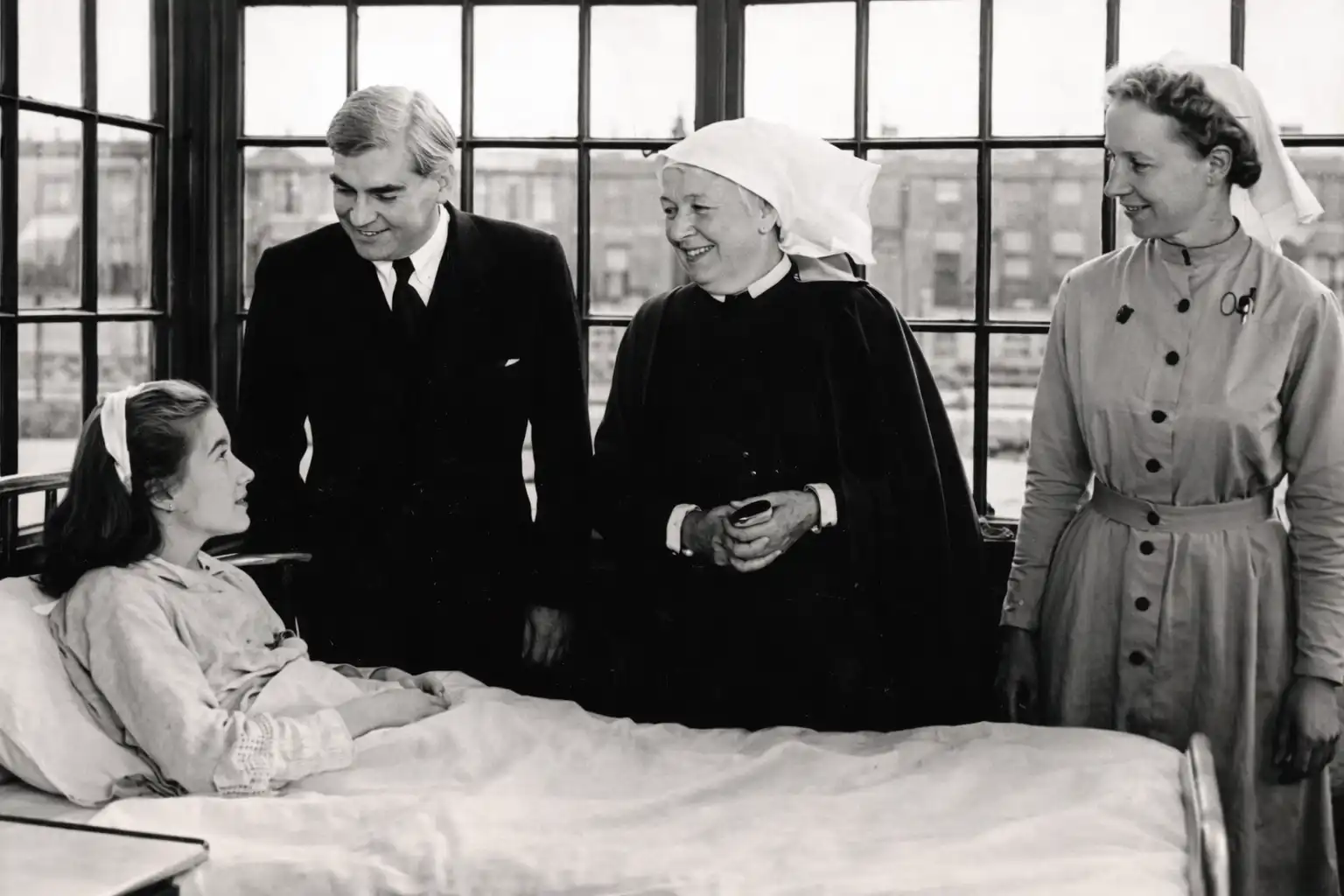
Post-war key people
| Person | Role | Key contribution |
|---|---|---|
| Clement Attlee | Prime Minister 1945–51 | Led Labour government that built the welfare state |
| Aneurin (Nye) Bevan | Minister for Health | Established the NHS in 1948 |
| William Beveridge | Economist and reformer | 1942 Beveridge Report — identified five Giant Evils, basis of welfare state |
| R A Butler | Education minister | Education Act 1944 — free secondary education in England and Wales |
Decolonisation and the Cold War
Independence came quickly to former colonies: in 1947 alone, nine countries gained independence, including India, Pakistan and Ceylon (now Sri Lanka). Over the next 20 years, other colonies in Africa, the Caribbean and the Pacific followed. At the same time, the UK developed its own atomic bomb and joined NATO — the North Atlantic Treaty Organization — an alliance of nations formed to resist the perceived threat of invasion by the Soviet Union and its allies. In the 1950s, under the Conservative government of Harold Macmillan, Britain enjoyed economic recovery and growing prosperity. Macmillan was famous for his 'wind of change' speech about decolonisation and independence for the countries of the Empire.
The Windrush generation and post-war immigration
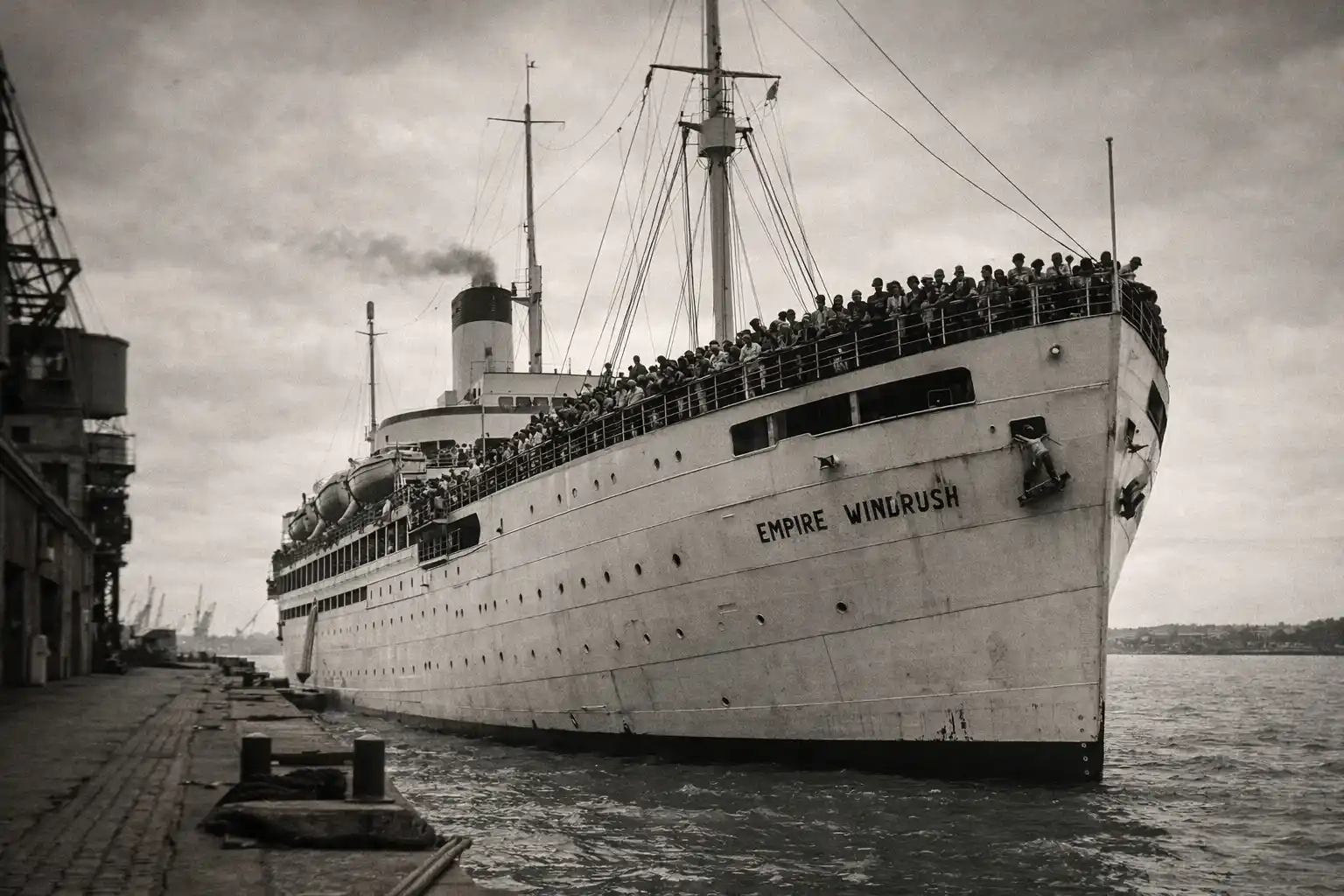
Rebuilding post-war Britain required workers. The government encouraged immigration from Ireland and Europe, and in 1948 invited people from the West Indies to come and work. The generation of Caribbean migrants who came from 1948 onwards became known as the Windrush generation, named after the MV Empire Windrush, one of the first ships to bring this wave of workers. Through the 1950s, further immigration was encouraged: centres in the West Indies recruited bus drivers; textile and engineering firms in the north of England and Midlands sent agents to India and Pakistan. For about 25 years, people from the West Indies, India, Pakistan and later Bangladesh came to work and settle in Britain. In the late 1960s, new laws restricted immigration, requiring a strong connection to Britain through birth or ancestry. In the early 1970s, Britain admitted 28,000 people of Indian origin who had been forced to leave Uganda.
The Swinging Sixties and social reform
The 1960s were a decade of significant social change, known as the Swinging Sixties. British fashion, cinema and popular music flourished — The Beatles and The Rolling Stones were among the best-known groups. People became better off and bought cars and consumer goods in greater numbers. Social laws were liberalised, including those relating to divorce and abortion in England, Wales and Scotland. New laws gave women the right to equal pay and made it illegal for employers to discriminate against women because of their gender. It had previously been common for employers to require women to leave work upon marriage. The 1960s also brought technological progress: Britain and France together developed Concorde, the world's only supersonic commercial airliner.
Economic crisis and Northern Ireland
The late 1970s saw the post-war economic boom come to an end. Prices rose sharply, the exchange rate was unstable, and strikes spread through many industries. The power of trade unions became a major political issue. In Northern Ireland, the Troubles intensified. In 1972 the Northern Ireland Parliament was suspended and Northern Ireland came under direct rule from Westminster. Around 3,000 people lost their lives in the violence in the decades after 1969.
Thatcher and the 1980s
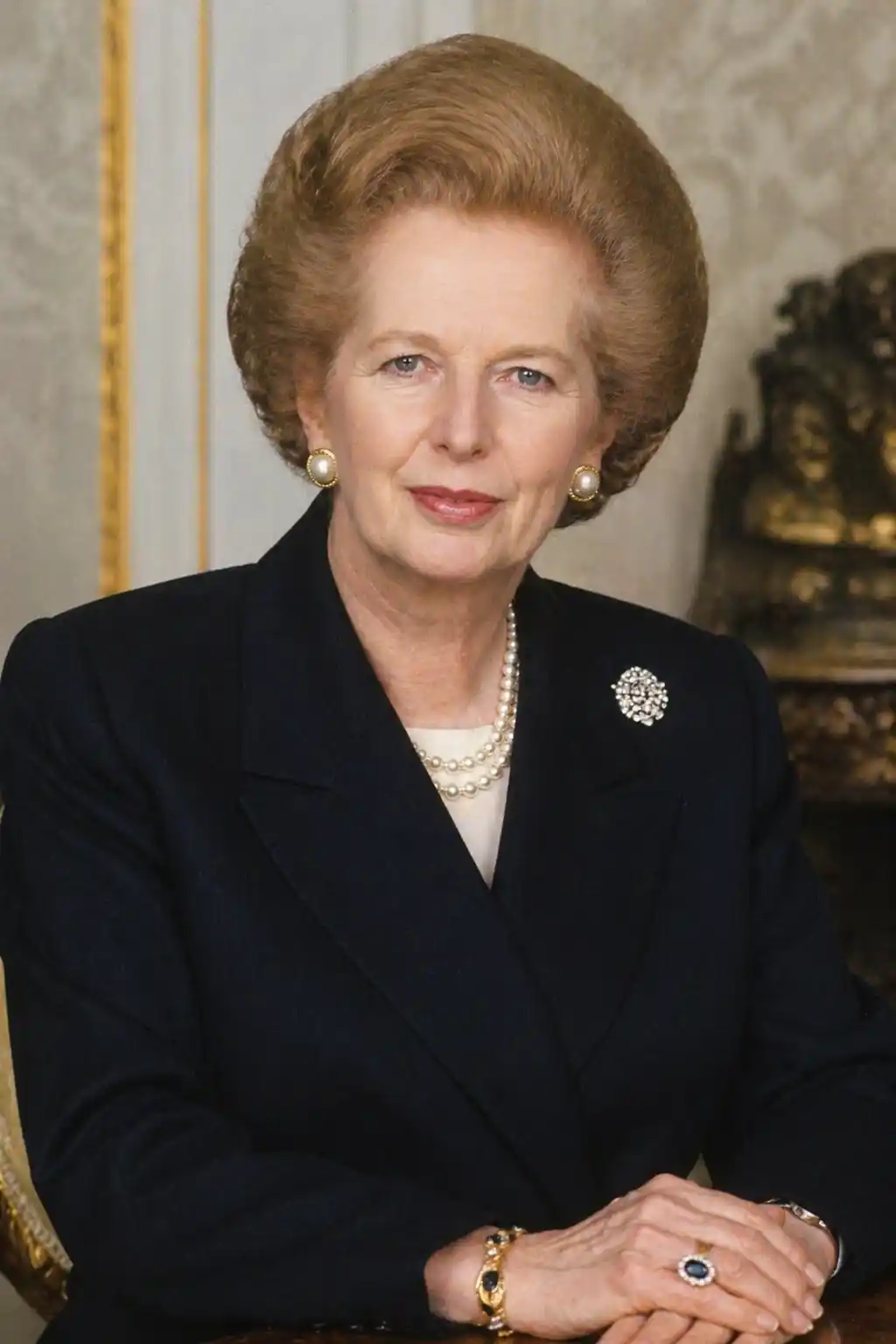
Margaret Thatcher, daughter of a grocer from Grantham in Lincolnshire, trained as a chemist and lawyer. She was elected as a Conservative MP in 1959, became Secretary of State for Education and Science in 1970, and in 1975 became leader of the Conservative Party. After the Conservative victory in 1979, she became the first woman Prime Minister of the UK and remained in office until 1990 — the longest-serving Prime Minister of the 20th century. Her government privatised nationalised industries, imposed legal controls on trade union powers, and allowed the City of London to grow as an international financial centre. Traditional industries such as shipbuilding and coal mining declined. In 1982, Argentina invaded the Falkland Islands — a British overseas territory in the South Atlantic. A naval taskforce recovered the islands through military action. John Major succeeded Thatcher and helped establish the Northern Ireland peace process.
Labour and devolution (1997–2010)
In 1997, the Labour Party led by Tony Blair won the general election. The Blair government created a Scottish Parliament with substantial powers to legislate, and a Welsh Assembly with fewer legislative powers but considerable control over public services. In Northern Ireland, the government built on the peace process, producing the Good Friday Agreement signed in 1998. The Northern Ireland Assembly was elected in 1999, suspended in 2002 and reinstated in 2007. Most paramilitary groups decommissioned their arms and became inactive. Gordon Brown took over as Prime Minister in 2007.
Coalition and Conservative governments (2010–2024)
In May 2010, no party won an overall majority for the first time since February 1974. The Conservatives and Liberal Democrats formed a coalition under David Cameron. The Conservative governments from 2015 to 2024 saw five Prime Ministers — David Cameron, Theresa May, Boris Johnson, Liz Truss and Rishi Sunak — and major events including the 2016 Brexit referendum (the UK voted to leave the EU) and the COVID-19 pandemic. The UK officially left the EU at 23:00 GMT on 31 January 2020. In 2024, Rishi Sunak called a general election and the Labour Party, led by Keir Starmer, won a majority and formed the government.
Dylan Thomas and Roald Dahl
Two writers of this era are worth noting. Dylan Thomas (1914–1953) was a Welsh poet and writer who often read his work publicly, including for the BBC. His best-known works include the radio play Under Milk Wood (performed after his death in 1954) and the poem Do Not Go Gentle into That Good Night (written for his dying father in 1952). He died aged 39 in New York; memorials including a statue and the Dylan Thomas Centre stand in his birthplace, Swansea. Roald Dahl (1916–1990) was born in Wales to Norwegian parents. He served in the Royal Air Force during WWII and began publishing in the 1940s. Best known for children's books — including Charlie and the Chocolate Factory and George's Marvellous Medicine — he also wrote for adults, and several of his books have been made into films.
Mary Peters
Born in Manchester in 1939, Mary Peters moved to Northern Ireland as a child. She won an Olympic gold medal in the pentathlon at the 1972 Munich Games. Afterwards she raised money for local athletics and became manager of the women's British Olympic team. She continues to promote sport and tourism in Northern Ireland and was made a Dame of the British Empire in 2000.
How to remember it
- Beveridge Report 1942, then NHS 1948.
- Thatcher: the first woman Prime Minister (1979) and the longest-serving of the 20th century, until 1990.
- The Good Friday Agreement was signed in 1998, and the Northern Ireland Assembly was elected in 1999.
Things to remember
- The Beveridge Report (1942) identified five Giant Evils: Want, Disease, Ignorance, Squalor and Idleness.
- The NHS was established in 1948 by Aneurin (Nye) Bevan — free healthcare at the point of use.
- The welfare state was designed to protect people from the 'cradle to the grave'.
- In 1947, nine countries gained independence including India, Pakistan and Ceylon (now Sri Lanka).
- The Windrush generation: Caribbean workers invited from 1948, named after the MV Empire Windrush.
- Margaret Thatcher: first woman PM (1979), longest-serving PM of the 20th century (until 1990).
- The Falklands War (1982): Argentina invaded; Britain's naval taskforce recovered the islands.
- Good Friday Agreement signed 1998; Northern Ireland Assembly elected 1999.
- In 2010, no party won an overall majority — the first time since February 1974; a Conservative–Liberal Democrat coalition was formed.
- In 2024, Labour under Keir Starmer won a majority and formed the government.
- The UK officially left the European Union (Brexit) at 23:00 GMT on 31 January 2020.
Great British Inventions and Innovators
British and Scottish scientists, engineers and inventors have shaped the modern world — from television and radar to the World Wide Web. This section brings together the key people and discoveries from the 20th century that appear in the test.
From the television in your living room to the web on your phone — the technologies that define modern life have deep British roots.
Communication and broadcasting
The television was developed by the Scottish inventor John Logie Baird (1888–1946) in the 1920s. In 1932 he made the first television broadcast between London and Glasgow. Radar was developed by another Scotsman, Sir Robert Watson-Watt (1892–1973), who proposed that enemy aircraft could be detected by radio waves. The first successful radar test took place in 1935. Working with radar led Sir Bernard Lovell (1913–2012) into astronomy. The radio telescope he built at Jodrell Bank in Cheshire was for many years the largest in the world and continues to operate today.
Computing and mathematics
Alan Turing (1912–1954), a British mathematician, invented the theoretical Turing machine in the 1930s. His work was foundational to the development of computer science and the modern computer. Sir Tim Berners-Lee (1955–) invented the World Wide Web. Information was successfully transferred via the web for the first time on 25 December 1990.
Medicine and biology
John MacLeod (1876–1935), a Scottish physician and researcher, was the co-discoverer of insulin, used to treat diabetes. The structure of the DNA molecule was discovered in 1953 through work at British universities in London and Cambridge. This contributed to major advances in medicine and crime detection. Francis Crick (1916–2004), one of those awarded the Nobel Prize for this discovery, was British. IVF therapy for infertility was pioneered in Britain by physiologist Sir Robert Edwards (1925–2013) and gynaecologist Patrick Steptoe (1913–1988). The world's first test-tube baby was born in Oldham, England, in 1978. Sir Peter Mansfield (1933–), a British scientist, co-invented the MRI scanner, which enables exact non-invasive images of internal organs and has revolutionised diagnostic medicine.
Engineering and transport
The jet engine was developed in Britain in the 1930s by Sir Frank Whittle (1907–1996), a Royal Air Force engineer officer. The hovercraft was invented by Sir Christopher Cockerell (1910–1999) in the 1950s. Britain and France jointly developed Concorde, the world's only supersonic passenger aircraft. It first flew in 1969, began carrying passengers in 1976, and was retired from service in 2003. The Harrier jump jet — an aircraft capable of taking off vertically — was also designed and developed in the UK. The cash-dispensing ATM was invented by James Goodfellow (1937–) in the 1960s; the first was put into use by Barclays Bank in Enfield, north London in 1967.
Cloning
In 1996, British scientists Sir Ian Wilmut (1944–) and Keith Campbell (1954–2012) led the team that was first to clone a mammal — Dolly the sheep. This opened research into using cloning to preserve endangered species and for medical purposes.
| Invention | Inventor | When |
|---|---|---|
| Television | John Logie Baird (Scottish) | 1920s; first broadcast London–Glasgow 1932 |
| Radar | Sir Robert Watson-Watt (Scottish) | First test 1935 |
| Jodrell Bank radio telescope | Sir Bernard Lovell | Built in Cheshire; once largest in world |
| Turing machine (computing) | Alan Turing | 1930s |
| Insulin | John MacLeod (Scottish) | Co-discoverer; treats diabetes |
| DNA structure | Francis Crick (+ colleagues) | Discovered 1953; Nobel Prize |
| Jet engine | Sir Frank Whittle (RAF) | 1930s |
| Hovercraft | Sir Christopher Cockerell | 1950s |
| Concorde | Britain and France (jointly) | First flew 1969; passengers from 1976; retired 2003 |
| Harrier jump jet | Designed and developed in UK | Aircraft capable of vertical take-off |
| ATM (cashpoint) | James Goodfellow | 1960s; first use Barclays Enfield 1967 |
| IVF treatment | Edwards and Steptoe | First test-tube baby Oldham 1978 |
| Cloning (Dolly the sheep) | Wilmut and Campbell | 1996 |
| MRI scanner | Sir Peter Mansfield | Co-inventor; revolutionised diagnostics |
| World Wide Web | Sir Tim Berners-Lee | First transfer 25 December 1990 |
How to remember it
- Television 1932 (Baird), radar 1935 (Watson-Watt), the jet engine in the 1930s (Whittle).
- The World Wide Web: Sir Tim Berners-Lee, with the first successful data transfer on 25 December 1990.
- Dolly the sheep, in 1996, was the first cloned mammal.
Things to remember
- Television: John Logie Baird (Scottish); first broadcast London–Glasgow in 1932.
- Radar: Sir Robert Watson-Watt (Scottish); first successful test 1935.
- Turing machine: Alan Turing; foundational to computer science.
- World Wide Web: Sir Tim Berners-Lee; first successful data transfer 25 December 1990.
- DNA structure: discovered 1953 at British universities; Francis Crick awarded Nobel Prize.
- First test-tube baby born in Oldham, England in 1978 — pioneered by Edwards and Steptoe.
- ATM: James Goodfellow; first machine used by Barclays Bank in Enfield, north London, 1967.
- Dolly the sheep: first cloned mammal, 1996 — Wilmut and Campbell.
- Jet engine: Sir Frank Whittle (RAF), 1930s.
- Hovercraft: Sir Christopher Cockerell, 1950s.
- Concorde: developed jointly by Britain and France; first flew 1969; passengers from 1976; retired 2003.
- Harrier jump jet: capable of vertical take-off — designed and developed in the UK.
Finished Chapter 3?